
UPF fishing shirt vs sunscreen: what covers what
They do different jobs. The shirt covers your arms and back all day. Sunscreen handles what the shirt can’t reach.
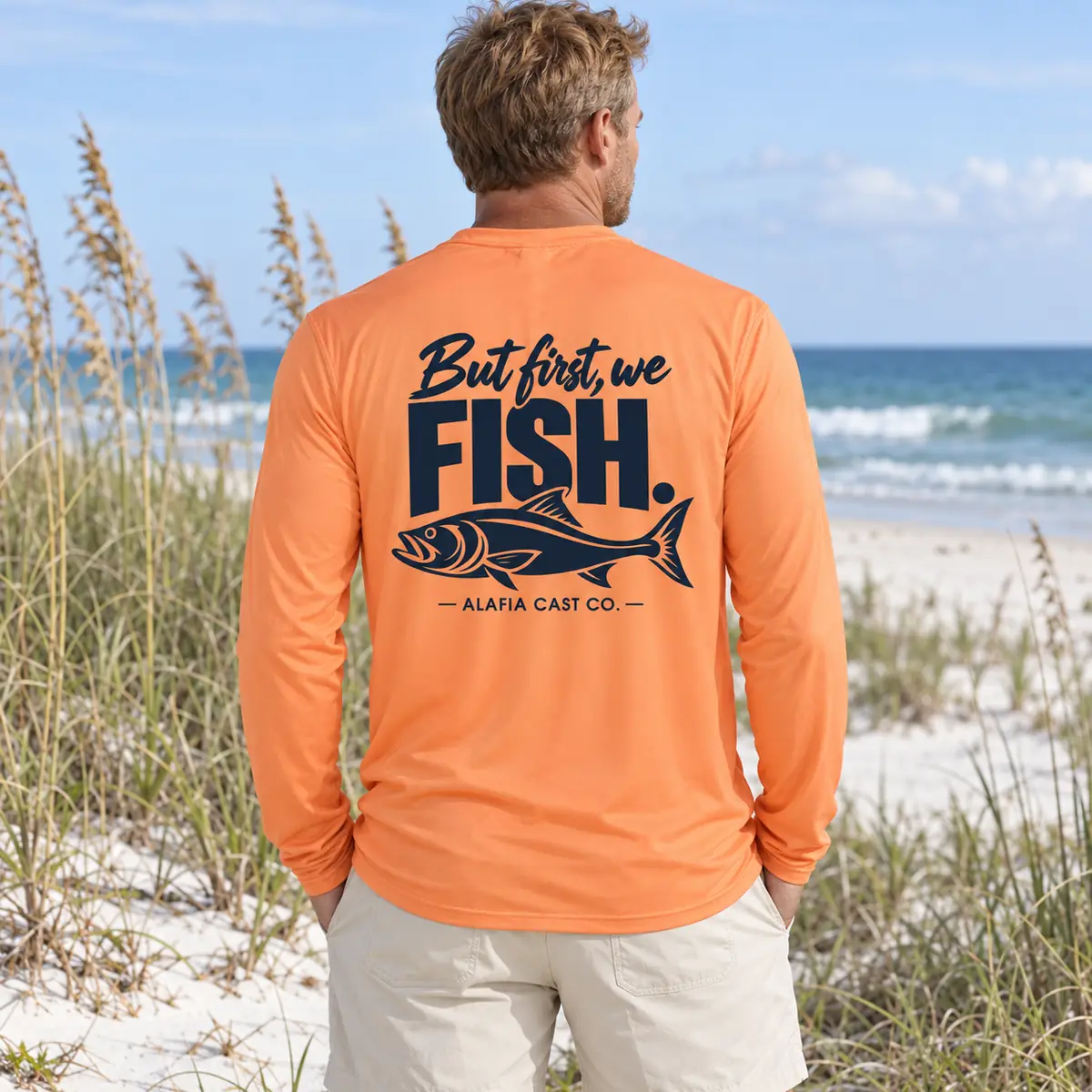
UPF and SPF
The Skin Cancer Foundation explains UPF as the amount of UV that passes through fabric to skin. UPF 50+ blocks about 98 percent or more on covered skin. DermNet says UPF addresses UVA and UVB, while SPF measures UVB sunburn protection. Neither number means you can ignore gaps in clothing or sunscreen directions.
The Skin Cancer Foundation rates UPF 30 to 49 as very good and 50+ as excellent. Its clothing Seal of Recommendation requires UPF 50. That is the Foundation’s standard, not a claim that Alafia Cast Co. holds the Seal. A garment’s own label is the place to check its rating. The shirt and sunscreen are separate parts of the sun plan.
What the U.S. fabric label means
The AATCC flowchart describes TM183 testing with a spectrophotometer to measure UV transmission. ASTM D6544 prepares samples to simulate use before testing, and ASTM D6603 guides labeling. The reported UPF uses the lower of the new and conditioned results. This is textile testing, not a measurement of an entire person’s protection.
DermNet describes conditioning that simulates about two years of use with 40 launderings and UV exposure, plus chlorinated water for swimwear. It also notes that the U.S. guide sets no minimum garment body coverage, unlike Australian and EU standards. A high-rated fabric can still leave skin out. Read the garment’s cut and label together.
According to the Skin Cancer Foundation’s explanation of UPF, 15 blocks about 93.3 percent of UV, 30 about 96.7 percent and 50+ about 98 percent or more. Do not turn those values into an SPF equivalent. They describe transmission through fabric, not how much sunscreen you applied or how often you renewed it.
Clothing coverage
As a practical clothing check, long sleeves cover the arms while the body of the shirt covers the chest, shoulders and back. A hood covers the ears and back of the neck when it is up. Check those areas after turning your head or casting. The shirt does not cover the face or hands just because its fabric has a high UPF rating.
The Skin Cancer Foundation recommends a hat brim of 3 inches or more all around and sunscreen on areas clothing misses. A cap’s front brim does not make it an all-around hat. A gaiter and sun gloves are optional ways to add coverage, but look for their own ratings. A piece of unlabelled fabric should not be assigned UPF 50+ by assumption.
For the neckline choice, use the fishing sun-shirt guide and the sun-hoodie guide. Anatomy of a Sun Shirt covers the confirmed Alafia features. Choose the garment, then check what it leaves exposed.
Choose sunscreen from its label
The FDA recommends broad-spectrum SPF 15 or higher. AAD recommends broad-spectrum, water-resistant SPF 30 or higher. Those are each source’s recommendations. Read the directions on the product you choose, including application and water resistance, rather than treating the SPF number as the only instruction.
FDA says about 1 ounce, roughly a shot glass, covers the body. Apply 15 minutes before sun. That full-body amount is not a new exact dose for the smaller areas your shirt leaves out. Cover the exposed areas as the product directs. Do not leave the ears out because the hood was up when you left home.
FDA says reapply at least every two hours and right after swimming or sweating. Water-resistant labels state 40 or 80 minutes. No sunscreen is waterproof or sweatproof. Keep it where you can reach it for a break instead of under the gear you will not unpack until returning. The shirt does not change the sunscreen label’s directions.
Wet shirts, stretch and ordinary cotton
AAD clothing guidance says dry clothing protects better than wet clothing and recommends dense fabric, dark or bright colors and a UPF label. The Skin Cancer Foundation says loose fit helps because tight fabric stretches and admits more UV. Check a casting reach rather than judging only a standing fit.
The Skin Cancer Foundation describes a white cotton tee as about UPF 7 dry and about 3 wet. It gives dark denim as an example that can reach around UPF 1,700. Those examples show why fabric and condition matter. They are not reasons to assign a new rating to an Alafia tee, print or color.
Vapor says Solar fabric has built-in, permanent SolarBloc UPF 50+ protection wet or dry. Keep that as a manufacturer-specific claim, separate from AAD’s general clothing advice. REI discusses moisture and stretching as factors in protection. A quick-drying description alone is not proof of any fabric’s wet rating.
Clothing care and a long outing
Follow the garment care label. As practical care advice, rinse salt and sunscreen out after fishing and avoid ironing directly on prints. Skipping fabric softener is common advice for wicking performance polyester, but the label remains the authority for a particular shirt. The conditioning in the UPF test is not a lifetime guarantee against wear.
Use the size and fit guide for measuring steps, then the exact product chart. For a full-day routine, read Florida sun and a long day on the water. FDA identifies 10 a.m. to 2 p.m. as peak sun hours and recommends limiting sun exposure then. Clothing is part of that plan, not permission to stay longer.
FDA also lists long sleeves, pants, a wide-brim hat and sunglasses as sun-protection choices. Ask a doctor about sunscreen for babies under 6 months. For a family trip, make the coverage plan for each person rather than sharing one assumption about shirts or sunscreen.
Planning around the trip
Use Alafia River fishing, Tampa Bay fishing by season and piers and bridges to plan the outing. The family fishing guide covers a crew day. These links are for trip planning, not claims that a shirt makes any location or weather safe.
Browse Sun gear, Men, Women or Youth. Check the exact product’s rating and chart before ordering. Put sunscreen in the same accessible kit as the rest of the day’s gear. Covered skin and exposed skin need different tools, used together.
Sources
The sources linked in this guide are collected here.
What to wear
Long sleeves, sun hoods and Florida art, printed to order in UPF 50+.
Shop UPF 50+ sun gearFAQ
These answers cover the choices and advice discussed above.