
How to choose a sun hoodie for fishing
A sun hoodie is a thin UPF layer you wear in July, not a sweatshirt. Here’s what to check before you buy one.
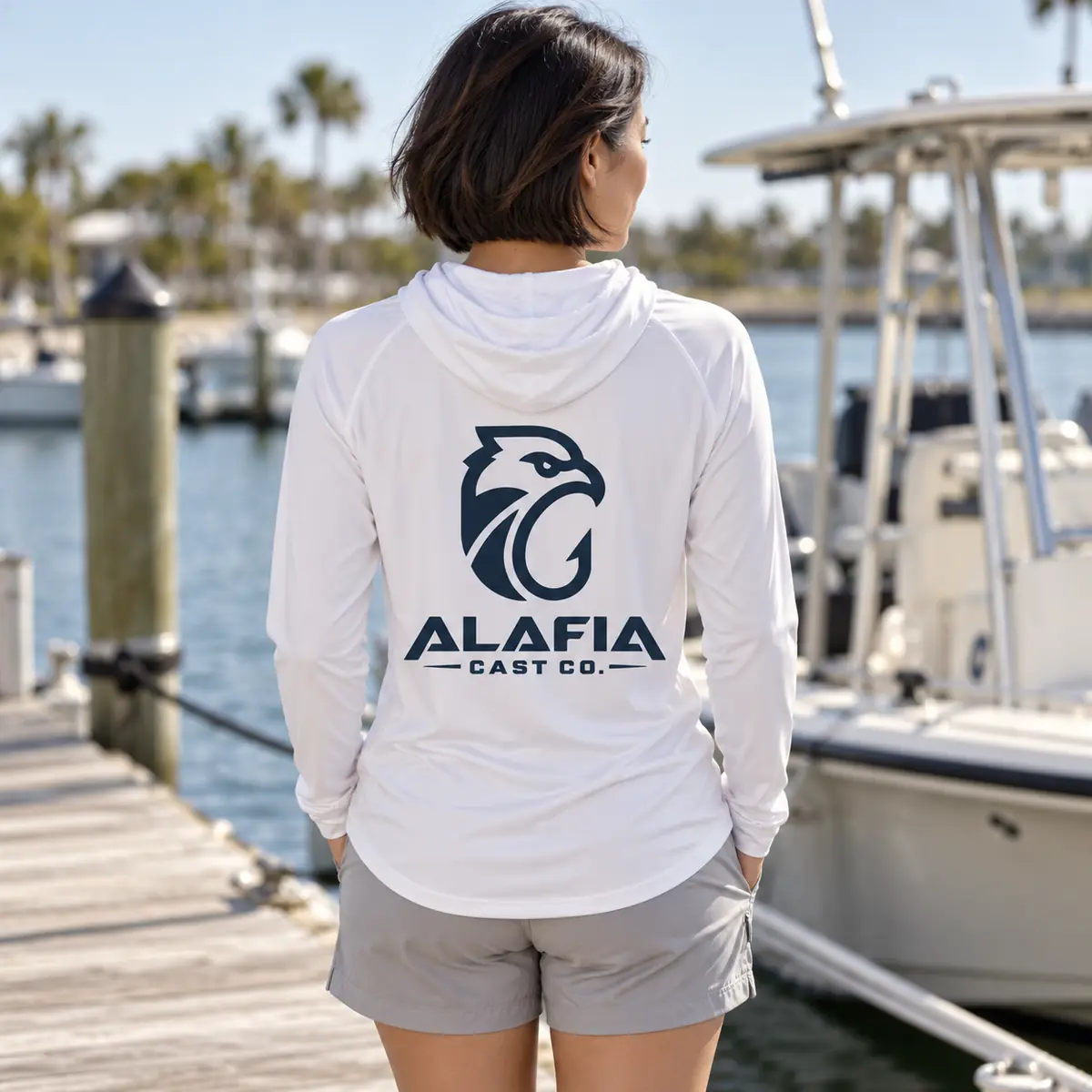
Checking a hoodie
The Skin Cancer Foundation explains that UPF measures how much UV passes through fabric. It rates UPF 50+ as excellent and says that level blocks about 98 percent or more on covered skin. Start with the exact garment’s label. The word hoodie can describe very different clothing, so it is not a sun-protection rating.
As practical buying guidance, put the hood up and turn your head as if watching a line. Look at the back of the neck and the ears. Reach forward like a cast and check the wrists and hem. A useful hood is one you can keep positioned over the skin you intend to cover. No fabric rating covers a gap beside it.
Our sun hoodies are lightweight sun layers, not fleece sweatshirts. For the parts of the shirt, read Anatomy of a Sun Shirt. The confirmed features include polyester fabric and dye-sublimated artwork. Neither the cut nor the artwork creates a cooling promise.
Hood, cap and a wider brim
The Skin Cancer Foundation recommends a hat brim of at least 3 inches all around. A sun hood covers ears and the back of the neck, areas a ball cap misses. Pairing a hood with a cap brim is practical clothing guidance. It does not turn that front brim into the Foundation’s recommended all-around hat.
Check your face after turning your head or looking down. The hood leaves it exposed. When you lower the hood, the neck and ears may become exposed too. Add sunscreen where coverage ends rather than assuming the first-light setup stays the same for every cast. A gaiter is an optional coverage choice, not a required part of every hoodie.
The FDA lists sunglasses among sun-protection choices. Polarized sunglasses are part of our existing water-day kit, but polarization alone is not a UV rating. Read the eyewear’s stated UV protection. A hood and cap do not replace eye protection simply because they shade part of the face.
Fit: loose enough to move
The Skin Cancer Foundation recommends loose fit because tight fabric stretches and can let more UV pass through. Do not read that as a rule to buy the largest size. As general fit guidance, leave enough room across the back and shoulders for your cast without letting sleeves gather around your hands.
Use the fishing shirt size guide for measuring steps, then read the exact product chart. Men’s, women’s and youth cuts should each be checked separately. This guide gives no garment dimensions or letter-size conversion. A true-to-size description still needs a chart check for the cut you are ordering.
For a child, leave practical room to grow but check the hands and sleeve ends during a reach. Do not choose by age alone if the chart uses measurements. Matching crew artwork is a separate choice from matching sizes. Each person needs a fit check that works for their own movement.
UPF testing and fabric condition
The AATCC flowchart identifies TM183 for UV transmission testing, ASTM D6544 for conditioning and ASTM D6603 for labeling. The label uses the lower result from new and conditioned fabric. That process measures the fabric, not how far a hood reaches on your head.
DermNet describes conditioning that simulates about two years of use through 40 launderings and UV exposure, plus chlorinated water for swimwear. The U.S. labeling guide sets no minimum body coverage, unlike Australia and EU standards. That is another reason to read the fabric rating and examine the cut separately.
AAD clothing guidance recommends dense fabric, dark or bright colors, and a UPF label. It says dry clothing protects better than wet. MD Anderson discusses wear and stretch as factors that can reduce protection. Those are general clothing considerations, not invented test results for this hoodie.
What Vapor says about Solar fabric
Vapor says its Solar fabric has permanent, built-in SolarBloc UPF 50+ protection wet or dry, PURE-tech moisture wicking, quick drying, and anti-microbial and odor-resistant properties. Vapor also says that fabric carries the Skin Cancer Foundation’s Seal of Recommendation. These statements are attributed to Vapor, not a claim that Alafia Cast Co. is the Seal holder.
Vapor describes sublimation printing as dye entering the fabric. Our sun-shirt artwork is dye sublimated and printed after you order. That describes the print process, not added UV protection from a graphic. Read the product’s stated fabric rating rather than trying to judge protection from the size of the artwork.
The Skin Cancer Foundation says dark or bright colors absorb more UV. As general outdoor clothing guidance, lighter colors can feel cooler in sun. Do not use that feeling to assign a higher or lower rating to a color. The UPF label is what counts for a specific garment.
Shirt or hoodie?
As practical outing guidance, a long-sleeve crew can suit an early launch or a day when you prefer a separate hat. A hoodie adds neck and ear coverage while the hood is up. Neither choice sets a safe number of hours in sun. A tee leaves the arms exposed, so include those areas in the sunscreen plan.
For general layering guidance, wear the sun hoodie over a light base on cool mornings or as a light layer on a winter boat. Check the casting reach with that base on. A rain shell can go over it when rain comes. That layering suggestion is not a reason to remain outside in dangerous weather.
Use How to choose a fishing sun shirt to compare necklines and Florida sun and a long day on the water for breaks and timing. A sun hoodie provides coverage, not fleece warmth or protection from every outdoor hazard.
Sunscreen and care still matter
FDA recommends broad-spectrum SPF 15 or higher. AAD sunscreen guidance recommends broad-spectrum, water-resistant SPF 30 or higher. FDA says apply 15 minutes before sun and reapply at least every two hours and right after swimming or sweating. Use sunscreen on the skin the hood and sleeves leave open.
The UPF shirt vs sunscreen guide keeps those jobs separate. Follow the garment’s care label after the trip. Rinsing salt and sunscreen out and avoiding ironing prints are practical care suggestions. Skipping fabric softener is common advice for wicking performance polyester, but the label remains the authority.
Picking a hoodie for the trip
Read Alafia River fishing, Tampa Bay fishing by season or piers and bridges for the outing. For a crew, use the family fishing guide. These are planning links, not evidence that one hoodie suits every day.
Browse Sun gear, Men, Women and Youth. Check each exact product’s chart and fabric rating. Because the shirts are printed to order and sales are final under our refund policy, settle the fit before placing the order.
Sources
The sources linked in this guide are collected here.
What to wear
Long sleeves, sun hoods and Florida art, printed to order in UPF 50+.
Shop sun gearFAQ
These answers cover the choices and advice discussed above.