
Where to fish the Alafia River
Alafia River fishing from the Williams Park and Riverview boat ramps up to the freshwater South Prong. Which tide station to check, and when snook move in.
How the Alafia is laid out
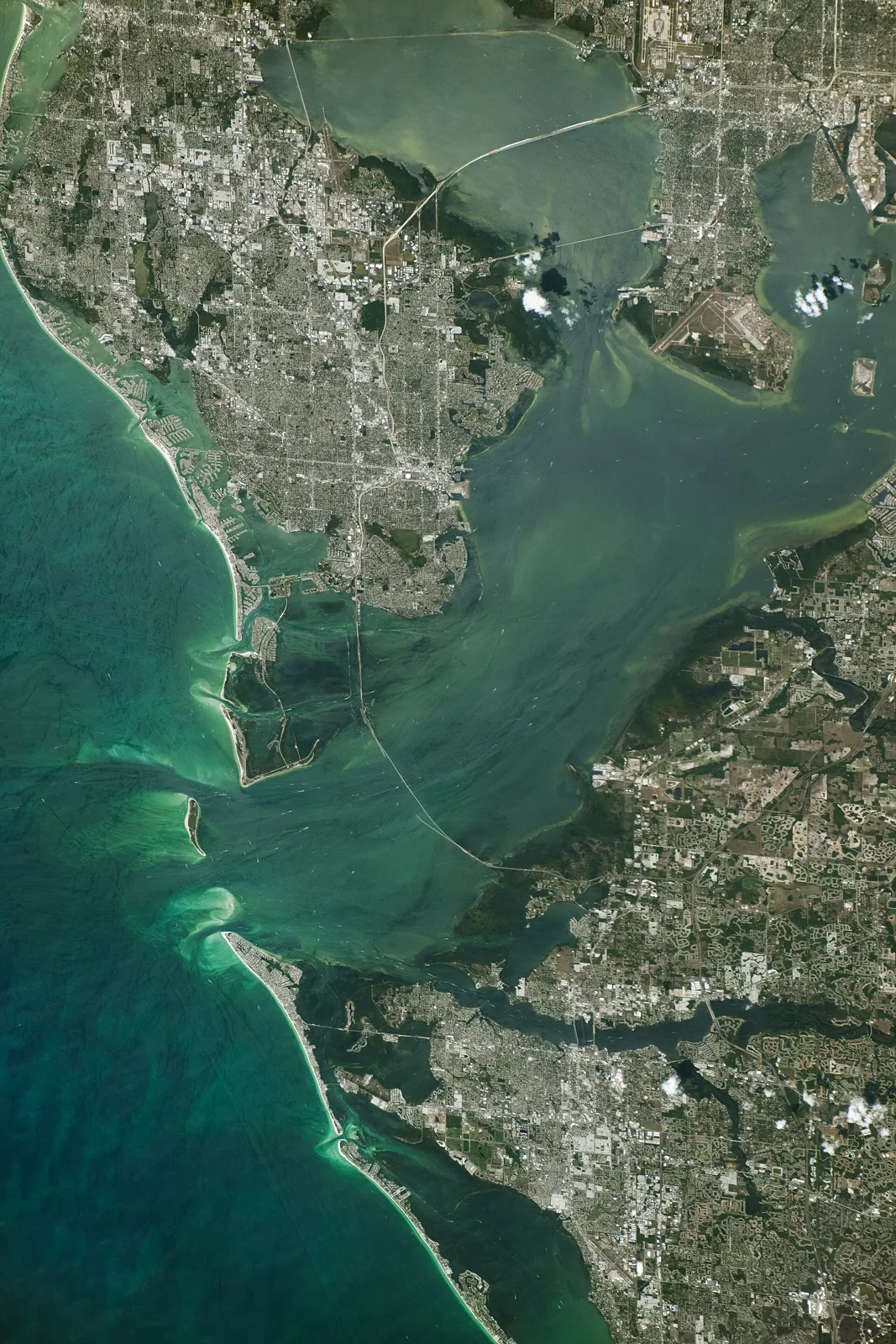
Think of the Alafia as two rivers. The lower stretch is tidal, brackish and wide, and it dumps into Hillsborough Bay by the US 41 bridge. Upstream it turns into a narrow, freshwater river with a 10-mile paddling trail, and off to the south the South Prong winds through Alafia River State Park. Where one becomes the other depends on the day: a big tide pushes salt farther up, and a wet summer pushes it back down.
Boat ramps and launches
The tidal river has two county ramps, both in Riverview and both open sunrise to sunset.
Williams Park Boat Ramp
9425 US Hwy 41, Riverview, FL 33578. This is the big one: four lanes right beside the US 41 bridge, room for larger boats, and a short run to open bay. There's paved parking, shore fishing, picnic shelters, restrooms and a playground. Bring a card, because the launch-fee machine takes debit or credit only (check the county page for the current fee). No swimming or wading.
Hillsborough County: Williams Park Boat Ramp
Riverview Civic Center Boat Ramp
11020 Park Dr, Riverview, FL 33569, on the south bank. It's smaller, with one ramp lane and a boat dock, but it also has a canoe/kayak launch and a fishing pier, so it works for a mixed group where some people fish from the dock and some go out. Restrooms and a playground too. Check the county page for park and launch fees.
Hillsborough County: Riverview Civic Center
The river gets skinny on a low tide, so check the tide against your boat's draft before you hook up the trailer. Fees and hours change, so check the county page before you go.
Kayak and paddle access
Riverview Civic Center has a canoe/kayak launch on the tidal river. Upriver, the Alafia River Designated Paddling Trail starts at Alderman's Ford Conservation Park (canoe entrance: 9625 Canoe Launch Loop, Lithia; opens 7 AM daily) and ends 10 miles downstream at Lithia Springs Conservation Park (3932 Lithia Springs Rd, Lithia, FL 33547). Conservation Parks charge a small entry fee; check the county page. Don't paddle into the spring area at Lithia Springs; the takeout is just downstream. Florida DEP rates the trail easy to moderate, with shoals and easy rapids depending on water level. It's not recommended for beginners when the water is high and fast. Downed trees can mean a portage.
Bank and pier fishing
Williams Park has shore fishing. Riverview Civic Center has a fishing pier. At Alafia River State Park (14326 S. County Road 39, Lithia, FL 33547; main entrance is on CR 39, not Jameson Road), the Thatcher Road bridge and fishing pier give bank access to the South Prong. You can paddle upstream to Lake Hurrah.
Reading the tides on the Alafia
Use NOAA station 8726614, Alafia River North (near the US 301 bridge). It's a subordinate station corrected from St. Petersburg (8726520). Its mean range is 2.10 ft and great diurnal range is 2.84 ft (MLLW datums; based on a short 1977 series). Down near the mouth, NOAA station 8726572, The Kitchen (Kitchen Creek, about 2.4 miles south of the US 41 bridge), is the closer reference. Check live predictions here rather than a printed table. Treat any prediction as a first guess: a north wind or a week of rain will move the water more than the chart admits. As for timing, FWC's snook researchers like moving current, outgoing if you can get it, and they rate four-tide days over two-tide days.
Species by season
| Season | Lower tidal river | Upper river & State Park |
|---|---|---|
| Winter (Dec–Feb) | Snook stack up in low-salinity water and deep river holes to ride out the cold, and they get sluggish below 65°F. Slow-worked artificials are FWC's winter pick. | Largemouth bass, bluegill and catfish in the park lakes and South Prong. |
| Spring (Mar–May) | Snook start sliding out of their winter spots toward spawning grounds by late spring. | Same freshwater species. |
| Summer (Jun–Aug) | Most big snook are out at the river mouths and passes spawning. Juveniles stay back in the rivers and creeks. | Same. |
| Fall (Sep–Nov) | Snook work their way back up the estuary in late summer and early fall. | Same. |
Florida State Parks recommends catch-and-release for bass. Conditions change year to year. No fish are promised. Sources: FWC snook sketch; Florida State Parks.
How to fish the lower river
Below the US 301 bridge the Alafia fishes like a small piece of Tampa Bay that happens to have banks. Snook are the fish most people come for, with trout and redfish around the grass and oysters toward the mouth.
Start with current and structure
Moving water first, structure second. FWC's snook sketch points anglers to outgoing current where it squeezes past something: cuts between islands, points off sandbars, channels through the flats. Look up the tide, then look at the water when you get there. A tide that's "running" on the chart can still be slack in a back bend.
Deep holes at the river mouth and in the channel can hold big snook, and FWC's suggestion for them is a live sardine as the outgoing tide starts. On summer nights, the dock lights are worth a look. Put a shrimp on the edge of the light rather than in the bright middle. No shrimp? FWC names a goldeneye or chartreuse Bomber as the backup.
Cold-water snook
In winter the deep bends matter. A Florida Sportsman piece quoting Capt. Kevin Little lists the Alafia among the Tampa Bay rivers where snook hole up in deep bends, along with mangrove-sheltered troughs and canals 6 to 10 feet deep. He favors south-facing banks with dark bottoms, which soak up whatever sun there is. That's one captain's pattern, so use it as a place to start rather than a promise about every bend.
FWC's cold-day setup is a little different. On the coldest windy days, its researchers suggest a bar or sandy bank on the northeast shore of an upper-bay canal or bayou, worked slowly with a suspending twitchbait or plastic grub. Snook get lethargic below 65°F and don't go far, so if you spook a spot, back off for about 30 minutes and try it again.
On tides, the two sources split. Little likes the incoming in early spring and the outgoing once the water warms. FWC leans outgoing in general. Try both and keep notes.
Baits and other tidal species
Snook eat both live bait and artificials. FWC's rough rule is artificials in winter, live bait in spring and summer. Little's live list runs to shrimp, pinfish, grunts and mud minnows, plus cut mullet or ladyfish. On the artificial side he throws suspending twitchbaits, topwaters and soft plastic shrimp. Decide which way you're going before you launch, because a bait well and a lure box don't pack the same.
Trout like sand and seagrass, and FWC's spotted seatrout profile says they slide into deeper, still water when it gets cold. Free-line a live shrimp or a small pinfish or pigfish near the bottom around the holes in a grass bed, or hang it under a float so it drifts over the top. Soft jigs, topwater poppers and spoons all work too.
Redfish spend winter over seagrass, mud or sand near oyster bars and spring-fed creeks, according to FWC's red drum profile. The classic setup is a live shrimp under a popping cork, with soft jigs, spoons and topwater plugs as alternatives. Both profiles cover the whole state, so read them as habitat clues, not a fishing report for this river.
For how those fish move through the year, see Tampa Bay fishing by season. Size limits and seasons change, so check FWC's rules separately before you keep a fish.
How to fish the upper river and South Prong
Up in the state park it's a different trip. The park's experiences page describes the South Prong as a blackwater stream through bottomland forest that was kept out of the mining, lined with red maple, swamp tupelo and water hickory. You won't launch here and run to the tidal river, so pick the access that matches the water you want to fish.
The fish are freshwater too: largemouth bass, bluegill and catfish in the lakes and the South Prong, with catch-and-release encouraged for bass. That also means a different license question. FWC ties the license to the species, so a freshwater trip may need a freshwater license even if you fished the lower river on saltwater last week.
Paddling the park water
The park has 24 named lakes, all left behind by mine reclamation, and Three Fingers Lake is the park's pick for paddling in the north section. Gas motors aren't allowed on the lakes. If you want the South Prong instead, the park's boat ramp is on Thatcher Road south of the park. Look at the park's access information before you decide where to unload.
It's an easy place to spend a whole day. There are restrooms in the picnic area, a playground and two pavilions, and the park is open 8 a.m. to sunset (admission details are on its page). Keep an eye out for alligators along the river and lakes.
A day on the river
- The night before, pull up NOAA's live predictions for station 8726614 and hold the low tide up against your boat's draft. Check the launch's hours and bring a card.
- The county ramps open at sunrise, so that's your launch time at Williams Park or Riverview Civic Center. The state park doesn't open until 8 a.m., so don't show up there at first light.
- Know which river you're fishing before you unload. Tidal snook and South Prong bass need different access. Leave yourself time to get back to the takeout.
- Watch the sky. Summer storms build fast in the afternoon, so plan to come in early if they do. No fish is worth staying out for.
The National Weather Service's safe-boating guidance comes down to three things: check the marine forecast, keep NOAA Weather Radio on, and head in when storms build. Decide on your cutoff before the first cast, while it's still an easy call.
Safety on the river
The National Weather Service's lightning guidance says, “When thunder roars, go indoors.” Wait 30 minutes after the last thunder before going back out. The ramp closing at sunset isn't the only clock you're on.
There are alligators in the river and the park lakes. Williams Park doesn't allow swimming or wading, so fish from the bank and stay out of the water. On the paddling trail, take Florida DEP's warning about high, fast water seriously. "Easy to moderate" still means shoals, rapids that change with the water level and the odd portage around a downed tree.
Sort out the takeout before you start the 10-mile trail. It ends at Lithia Springs, just downstream of the spring area, and you shouldn't paddle into the spring itself. If the water looks like more than you're ready for, do a shorter trip another day.
Handling and release
FWC's fish-handling guidance boils down to wet hands and as little handling as you can manage. Use a knotless rubber net, and hold the fish level with support under its belly, not by the jaw, gills or eyes. Have the pliers out before the fish is in the boat.
Use non-stainless hooks so a hook left behind will rust out. If a fish swallows it, cut the leader close and leave the hook in. With a circle hook and natural bait, don't set the hook; just reel. FWC says circle hooks are about 90 percent more likely to catch a fish in the mouth.
Snook get a little extra care. Crimp your barbs, unhook the fish in the water, and hold it gently facing into the current, in the shade if you can, until it swims off. Don't jerk it back and forth. If there's no current, as from a kayak on still water, move it forward in a slow figure 8 instead of pulling it backward. Trout are delicate, so if you're not keeping one, let it go fast.
What to bring
- The tide times, your launch, and your takeout if you're paddling.
- Rod, bait or lures, plus pliers and something to cut leader for a gut-hooked fish.
- A knotless rubber net, somewhere you can grab it mid-fight.
- More water than you think, sunscreen, a sun layer, and a plan for when you'll head in.
Rather stay on land? Our piers and bridges guide covers shore spots and whether they're open. For a shorter outing with kids, the family fishing guide compares spots that have restrooms.
For what to wear, start with how to choose a fishing sun shirt, see what each part covers in the Anatomy guide, then look at Sun gear. Sunscreen still goes on whatever the shirt doesn't cover.
More from Alafia Cast Co
Licenses and regulations
FWC: "License requirements follow the species of fish, regardless of where they are caught." Anglers under 16 don't need a license but must follow all the rules. Regulations change. Check FWC's current rules before you fish.
Snook · Tarpon · Regional maps
FWC’s current saltwater and freshwater fishing rules. Regulations change.
FAQ
These answers cover the choices and advice discussed above.