
Tampa Bay Piers and Bridges to Fish
Tampa Bay piers for shore anglers with current status from the agencies that run them, plus FWC's tips for bridge and dock-light fishing.
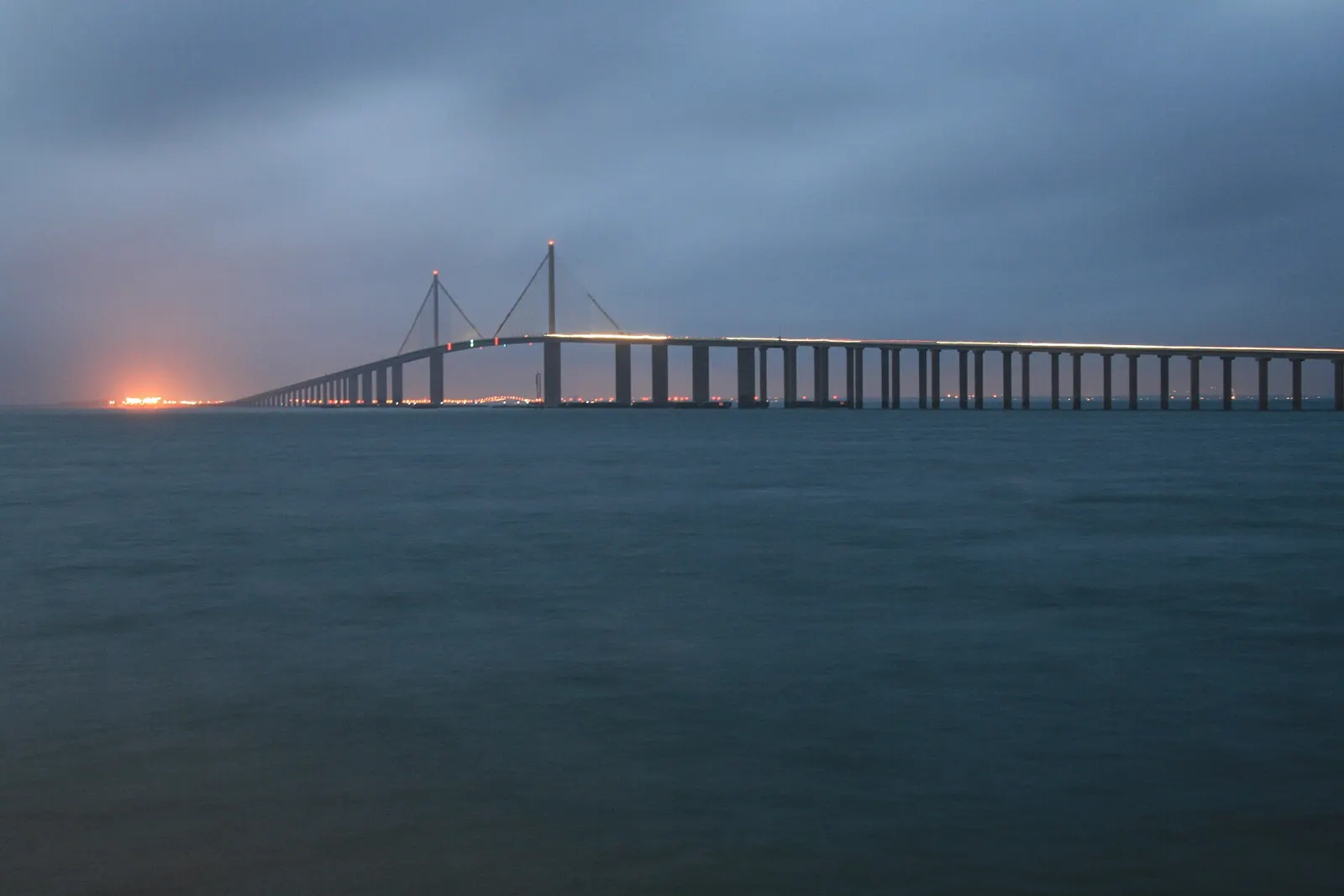
Pier status
This table keeps the October 15, 2026 agency status. Check each agency page the day you go. A dated listing is not a live access report.
| Pier | Status as of Oct 15, 2026 | Source |
|---|---|---|
| Fort De Soto Gulf Pier | Open, 7 a.m. to sunset | Pinellas County |
| Fort De Soto Bay Pier | Landward section open; far end closed for hurricane repairs | Pinellas County |
| Skyway Fishing Pier State Park | Open 24 hours; south Skyway without power since March 16, 2026, with limited bait shop service and limited night lighting | Florida State Parks |
| Ballast Point Pier | Closed since spring 2025 for hurricane damage repairs | City of Tampa |
| Riverview Civic Center pier (Alafia River) | Listed by Hillsborough County | Hillsborough County |
Fort De Soto
Pinellas County lists Fort De Soto Park at 3500 Pinellas Bayway S, Tierra Verde. It has two fishing piers. The Gulf Pier runs 1,000 feet into the channel between Mullet Key and Egmont Key. It sits by the fort parking lot and has a food and bait concession. The Bay Pier runs 500 feet into the current flowing in and out of Tampa Bay. The county says the far end of the Bay Pier is closed for repairs. Work is set to resume after the boat ramp work wraps up, expected late 2026. Pier hours are 7 a.m. to sunset. A Florida fishing license is required everywhere in the park, piers included.
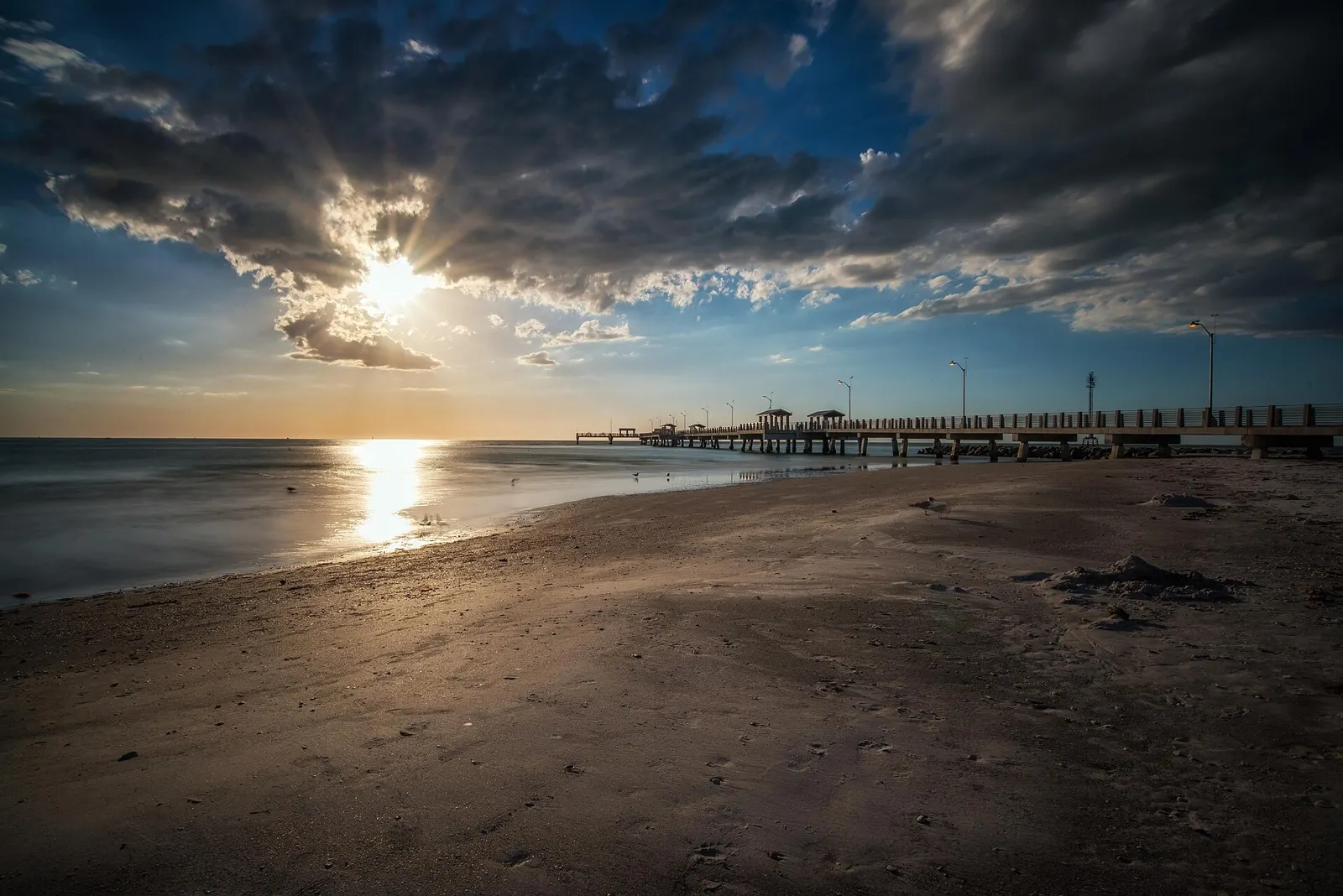
Skyway Fishing Pier State Park
The old Sunshine Skyway bridge is now a fishing pier at the mouth of Tampa Bay, with north and south sections. It's open 24 hours. Check Florida State Parks for current admission fees. You have to take the park's online Skyway Fishing Pier Education Course each year to fish there. Since March 16, 2026, the south Skyway has had no power, with limited bait shop service and limited lighting at night. The park lists snook, tarpon, grouper, black sea bass, Spanish and king mackerel, cobia, sheepshead, red snapper and pompano as common catches. Address: 4905 34th St. S #5000, St. Petersburg, FL 33711.
Ballast Point
The City of Tampa says the 600-foot pier at Ballast Point Park (5300 Interbay Blvd) has been closed since spring 2025 because of damage from hurricanes Helene and Milton. The rest of the park is open 6 a.m. to 8 p.m., and the boat ramp is open 24 hours. Check the city's page for a reopening date.
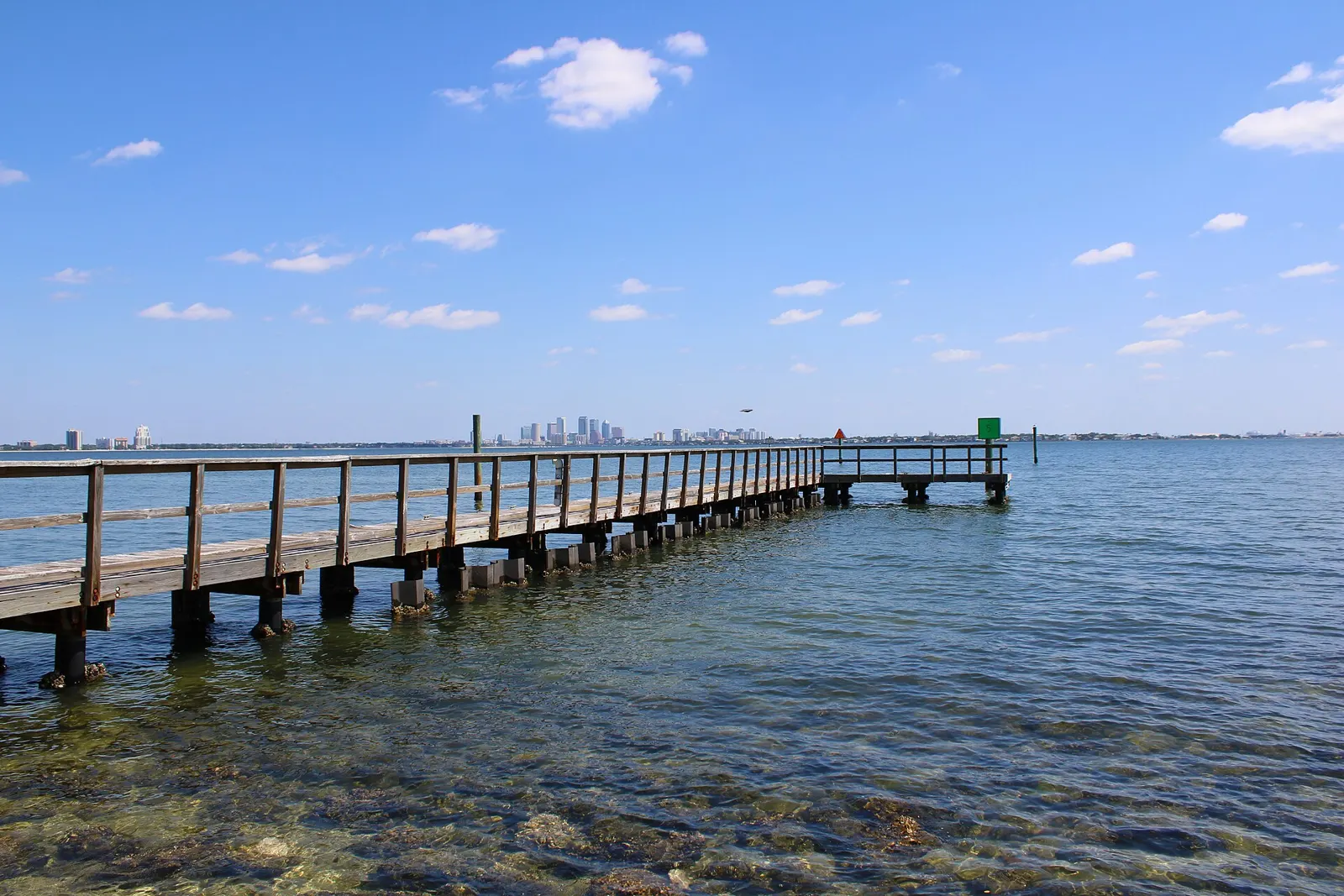
Spots on the Alafia
Hillsborough County lists Riverview Civic Center (11020 Park Dr, Riverview) with a fishing pier, and Williams Park (9425 US Hwy 41) has shore fishing. Both open sunrise to sunset. More in our Alafia River guide.
Bridges and dock lights at night
FWC's snook researchers suggest fishing bridges at night during the first two to three hours of the outgoing tide, anchored up-current and casting to the base of the pilings. At dock lights, soak a shrimp at the edge of the light, not in it, per FWC. They name the bridges over the Intracoastal and the Skyway as good spots for big spawning snook.
Source: FWC
How to fish a pier
Use FWC's current advice with the structure you can reach from the pier.
Read the current before casting
FWC's snook sketch recommends moving current, preferably outgoing, and says four-tide days beat two-tide days. Start by looking at the flow around the pilings. Decide where your bait will travel before casting. That is a practical way to use the current advice without assuming every piling holds fish.
FWC identifies channels through flats, cuts between islands and points beside sandbars as likely snook spots. It also says deep holes at river mouths and in coastal river channels can hold big fish. A pier gives you a fixed place to fish, not access to every habitat in the sketch. Work with the structure you can reach without casting across another angler.
FWC says snook take artificials and live bait. It suggests artificials in winter and live bait in spring and summer. Bring the setup you intend to use, then check the site's current gear rules. Advice about a lure does not mean that lure is allowed at every pier.
Pilings and lights
For big snook at bridges, FWC recommends fishing at night during the first two to three hours of the outgoing tide. Its boat-based method is to anchor up-current and cast live ladyfish, pinfish or grunt to the base of pilings. Keep that boat context attached to the advice. It is not an instruction to anchor from a pier or to block a channel.
At summer dock lights, FWC says to soak a shrimp at the edge of the light, not in it. If there are no shrimp, its sketch names a goldeneye or chartreuse Bomber. The agency identifies Intracoastal bridges, inside inlets and the Skyway as places for big spawning snook. It places smaller snook on flats and near-shore structure.
The south Skyway's limited night lighting is part of the dated status above. Do not plan around lighting that the park says is unavailable. For a river-based alternative, see the Alafia River guide. For fish movement through the year, see Tampa Bay fishing by season.
Skyway course and gear rules
FWC's Skyway page says the free online education course is required for people who fish the pier, including those 65 and older. Renew it yearly. Children under 16 are exempt when accompanied by an adult who has the certificate. Check that requirement before leaving home, not after unloading at the rail.
FWC lists restrictions on rod-and-reel and handline setups. It also lists date-dependent restrictions on multi-hook rigs and treble or double hooks. The agency says these rules reduce seabird entanglement. Check its page for the current restrictions and dates before choosing your rigs. Regulations change. Do not assume a setup used at another pier is allowed at the Skyway.
The education requirement and fishing-license requirement are separate checks. A child's course exemption does not tell you what an adult needs to fish. Use FWC's license guidance for the species you intend to target, and use the park and FWC Skyway pages for the site's requirements.
Pier gear and a pier net
FWC's fish-handling guidance says that from a pier, you should only lift fish you plan to keep. Use a pier net or sling. Otherwise, cut the line close or walk the fish to shore. Decide how you will handle a fish before making the first cast. A rod and a pair of pliers do not solve the height between the rail and the water.
FWC recommends a knotless rubber net and as little handling as possible. Wet your hands and support fish horizontally. Do not hold them by the jaw, gills or eyes. For a gut-hooked fish, the agency says to cut the leader close and leave the hook. It recommends non-stainless hooks.
With natural bait and circle hooks, FWC says to reel rather than set the hook. Its guidance says circle hooks are about 90 percent more likely to hook in the mouth. For fish that need reviving, FWC says to hold them head first into the current. Never move them back and forth. Keep the release method suited to where you are standing.
FWC’s current tarpon handling rules explain when fish must stay in the water. Do not try to raise one to the deck for a photograph. Check current FWC rules before targeting tarpon or any other species.
A hooked bird
FWC's hooked-bird guidance says to reel slowly. On a pier, keep the bird on the water until you can net it. Do not just cut the line on a pelican. Read the agency's instructions before the trip so you know where to find them if a bird becomes tangled.
FWC recommends eye protection and covering the bird's head. It says to hold a pelican's beak slightly open. Cut the barb and back the hook out, then check for other hooks. For an injured bird, use the FWC contact information on the linked page. Do not turn a difficult situation into an improvised handling lesson for the people around you.
The Skyway's education and tackle rules are intended to reduce seabird entanglement, according to FWC. Check your rig against those rules before casting. Put loose line away rather than leaving it on the deck.
Etiquette at the rail
Use these as practical courtesies, not as a quoted set of park regulations. Check posted rules at the pier as well.
- Do not cast over a neighbor's line. Look along the rail before casting and leave room for the bait's drift.
- Share rail space. Keep spare gear out of another angler's working area and leave room to pass.
- Pack out used line and bait packaging. Use a monofilament recycling point where one is provided, rather than leaving line on the pier.
- Keep the net or sling ready. Tell nearby anglers when you need space to handle a fish instead of swinging it across their lines.
Safety on the deck
The National Weather Service says to check the marine forecast and NOAA Weather Radio and head in when storms build. Its lightning guidance says to go indoors when thunder roars and wait 30 minutes after the last thunder. Plan an exit from the pier before the weather changes.
As general precautions, take care on slippery decks and keep hooks away from feet and passing people. Put a loose rig away before moving along the rail. Give children a clear place to stand away from the casting motion. A crowded pier is not the place to cast without checking behind you.
For heat, bring water and plan shade breaks rather than treating the whole outing as one uninterrupted stretch at the rail. If your crew needs a shorter walk or a playground break, compare the spots in our family fishing guide before choosing the pier.
What to bring
- A checked status page for the pier you chose. Confirm the day's access before loading the car.
- The required Skyway course certificate if that is your destination, and tackle checked against FWC's current site rules.
- Your rod and bait setup, pliers and leader-cutting gear. Keep hooks secured while carrying them.
- A pier net or sling for the handling method FWC describes. Do not leave the landing plan until a fish is at the surface.
- Water, sunscreen and a sun layer. Bring a plan for breaks and for leaving if thunder starts.
For clothing, our sun-shirt buying guide covers what to look for. Use Youth if you are outfitting children. The size and fit guide explains how to check the chart for each cut before ordering.
Licenses and regulations
FWC says license requirements follow the species you're fishing for. Regulations change. Check FWC's current rules before you fish.
FWC's license rules · FWC's current rules
FWC’s current fishing rules. Regulations change.
What to wear
FAQ
These answers cover the choices and advice discussed above.