
Tampa Bay Fishing by Season: A Season-by-Season Guide
What snook, redfish, trout and tarpon do in Tampa Bay through the year, with cold-water notes and links to current FWC rules.
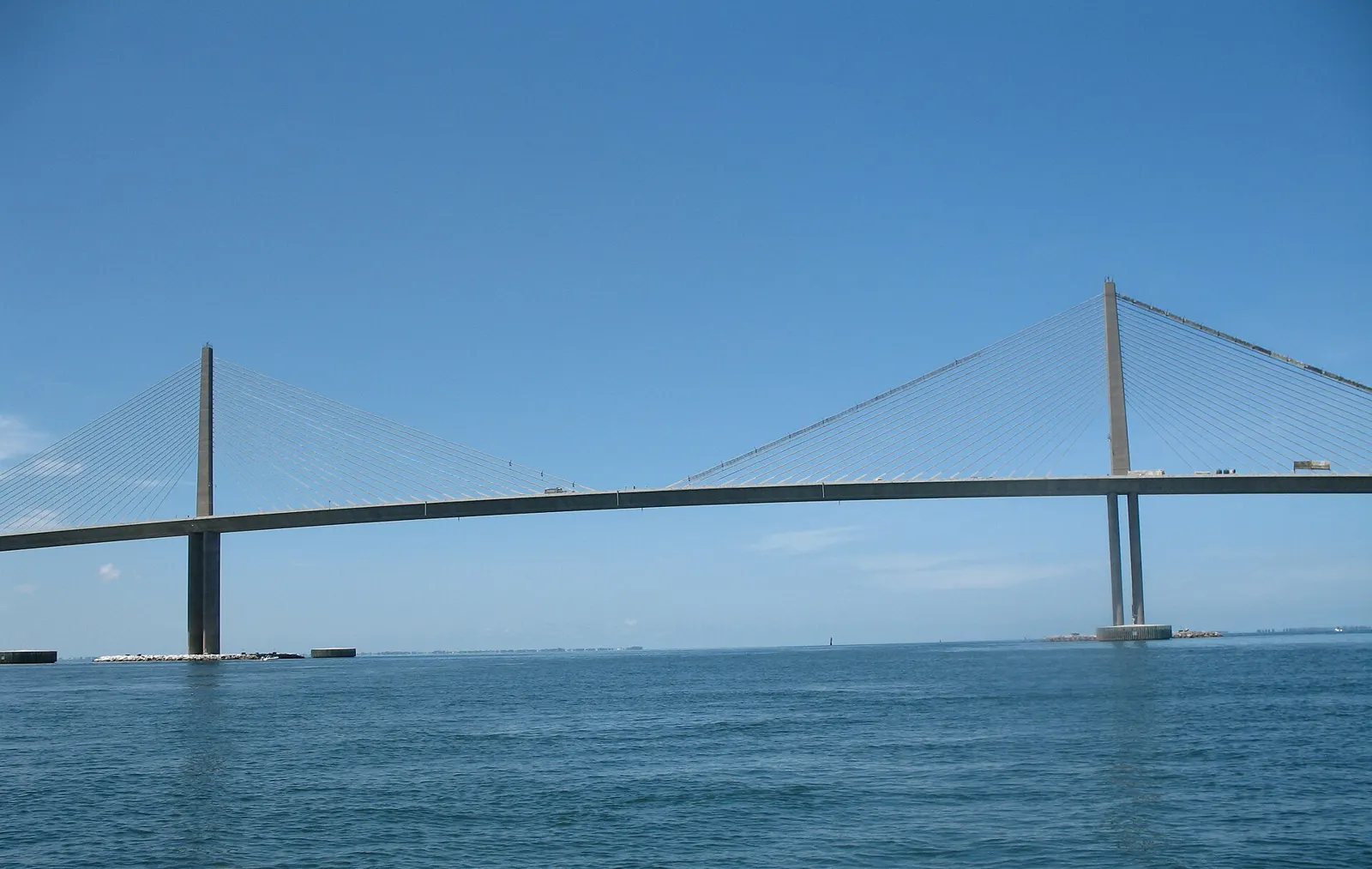
Season table
| Season | Snook | Redfish | Spotted seatrout | Tarpon |
|---|---|---|---|---|
| Winter (Dec–Feb) | In low-salinity upper estuary; sluggish below 65°F; FWC suggests artificial lures | Found in seagrass, over mud or sand bottoms, near oyster bars or spring-fed creeks | Not specified by the linked profile | Concentrate in South Florida when coastal water cools |
| Spring (Mar–May) | Leave winter spots for spawning grounds in late spring; FWC suggests live bait spring and summer | Not specified by the linked profile | Spawning season typically starts in late March | Spawning season starts in May |
| Summer (Jun–Aug) | Spawning; FWC has documented snook spawning inside Tampa Bay near the mouths of Terra Ceia and Miguel bays and around the Port Manatee spoil island | Spawning season begins about August | Spawning continues | Found throughout Florida's coastal waters in summer; spawn offshore |
| Fall (Sep–Nov) | Return to the upper estuary in late summer or early fall | Spawning aggregations in estuaries and off inlets through December | Spawning typically ends in late September | Spawning ends in September |
The FWC profiles and studies linked below supply this table. Unspecified entries are not claims that fish are absent.
At a glance: targets, water and approach
These are habitat and fishing notes, not harvest seasons. Use the linked FWC profiles to choose your fishing water.
| Season | Likely targets | Where | Approach and source |
|---|---|---|---|
| Winter | Snook, redfish, trout, sheepshead | FWC lists river holes for snook, bottom habitat near oyster bars for reds, deeper still water for trout and structure for sheepshead. | FWC suggests artificials for winter snook and live shrimp on the bottom for sheepshead. See the linked profiles below. |
| Spring | Snook, Spanish mackerel, cobia | FWC lists snook moving toward spawning water, mackerel over grass and reefs, and cobia near buoys and pilings. | FWC suggests live bait for snook, small shiny lures for mackerel and live crabs or small fish for cobia. |
| Summer | Snook, trout, tarpon | FWC lists coastal tarpon, snook near passes and trout spawning mostly over seagrass in its Tampa Bay study. | FWC suggests shrimp at dock-light edges for snook and float-drifted bait over grass for trout. Plan around NWS storm guidance. |
| Fall | Redfish, returning snook, mackerel | FWC lists redfish spawning aggregations near passes and snook returning to the upper estuary. | FWC lists live shrimp under a popping cork for reds. Tampa Bay charter captains commonly report fall kingfish and Spanish mackerel runs along beaches. |
Snook through the year
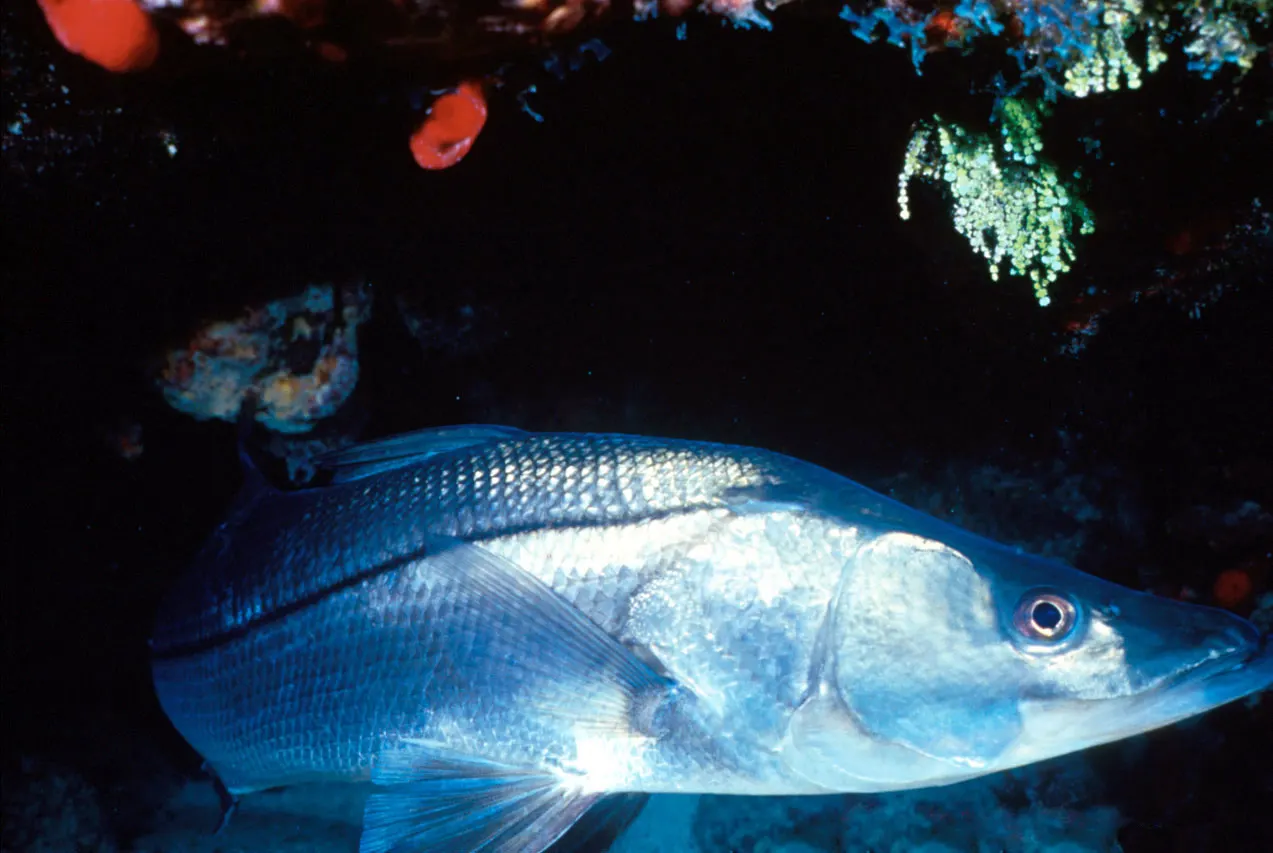
Per FWC, snook spawn from April or May through September or October depending on the year. They leave their upper-estuary winter spots for spawning grounds in late spring and early summer. They return in late summer or early fall. They get lethargic in water under 65°F. FWC suggests fishing moving current, preferably outgoing, and four-tide days over two-tide days. On summer nights, they suggest soaking a shrimp at the edge of a dock light, not in it.
Source: FWC
Redfish through the year
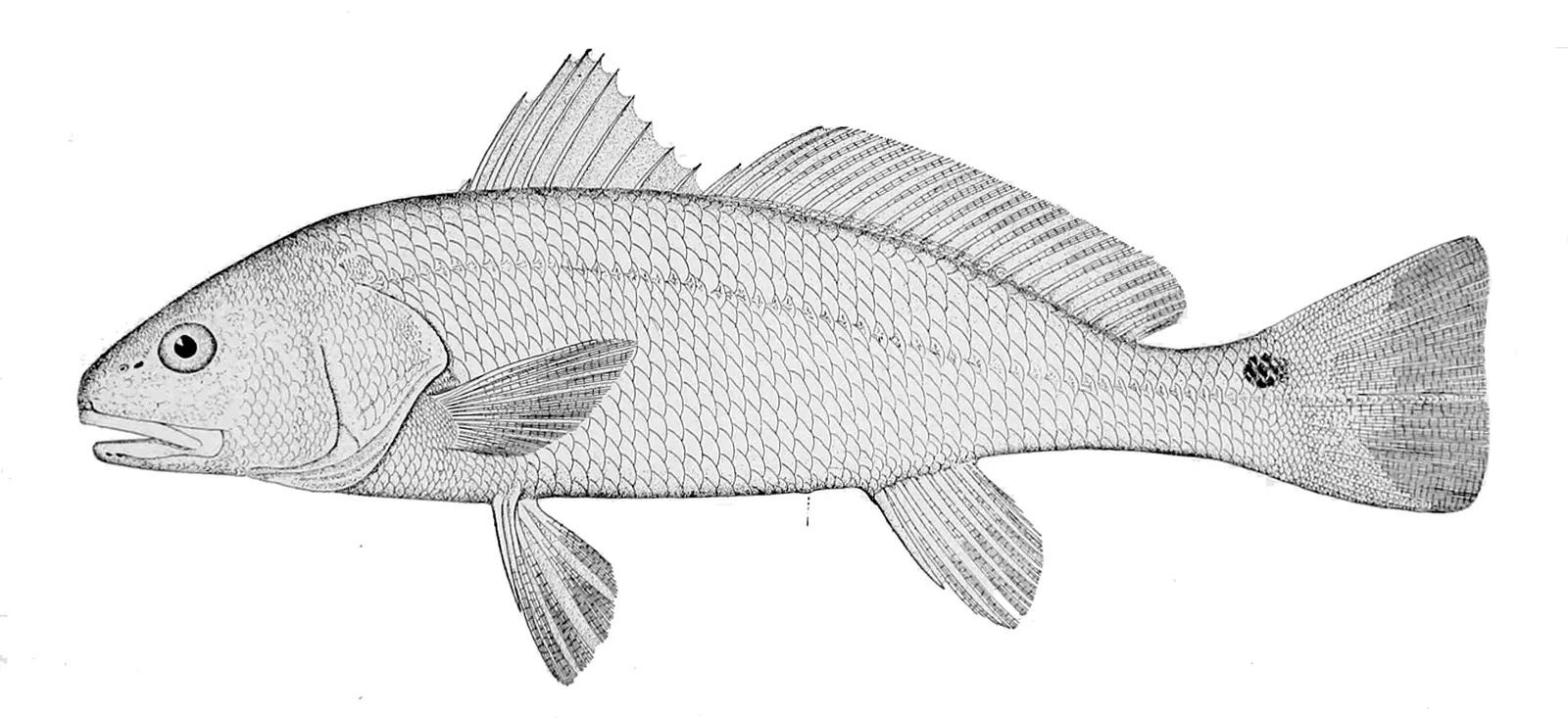
FWC calls redfish the state's most widespread estuarine fish. Young redfish stay inshore until roughly 30 inches, then move to the nearshore population. Spawning runs about August through December in passes, inlets and estuaries.
Source: FWC
Spotted seatrout
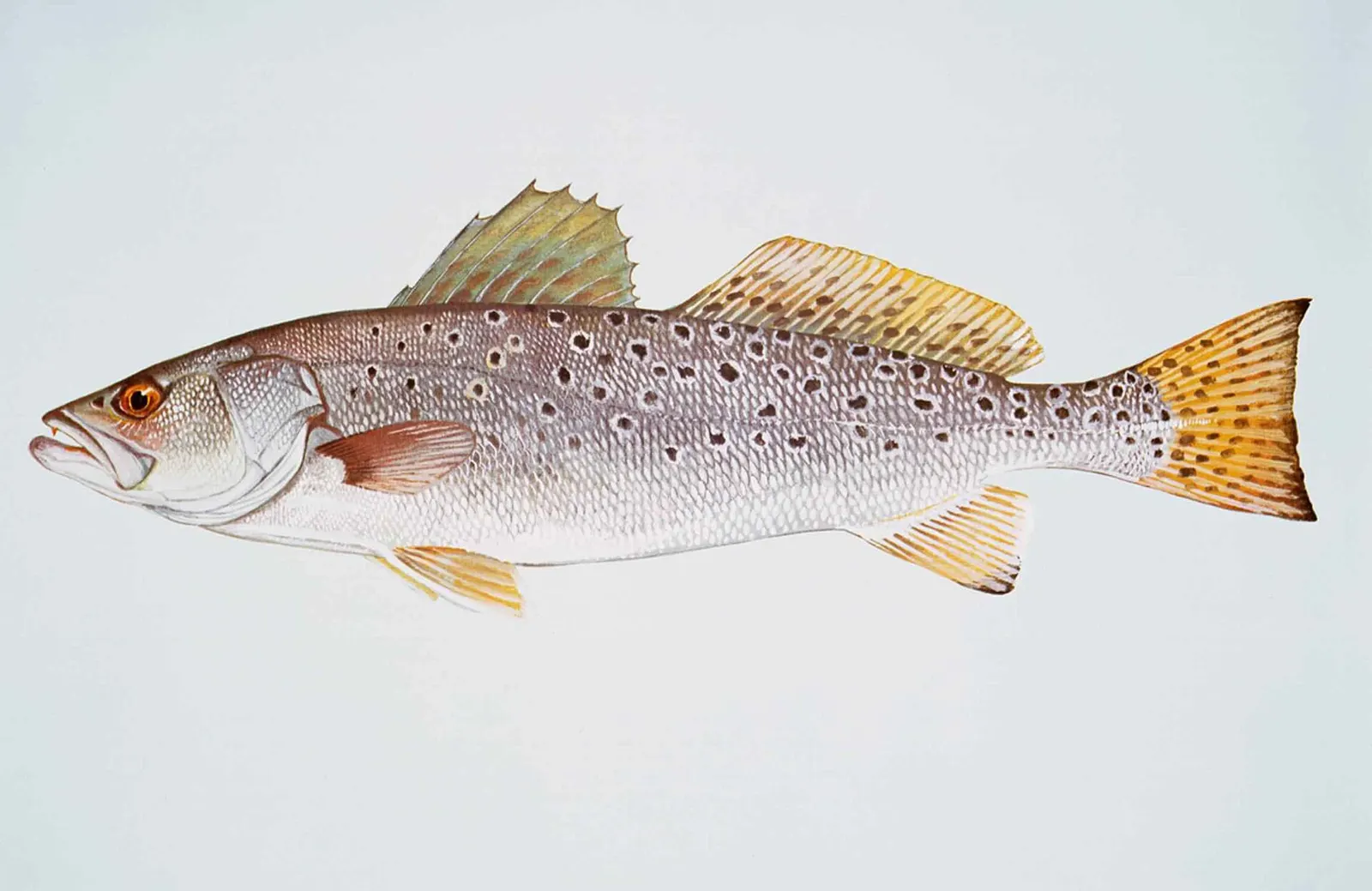
FWC researchers found the spawning season typically runs late March to late September. They heard spawning throughout Tampa Bay except Hillsborough Bay, most often in the lower bay and eastern middle bay, mostly over seagrass.
Source: FWC
Tarpon season
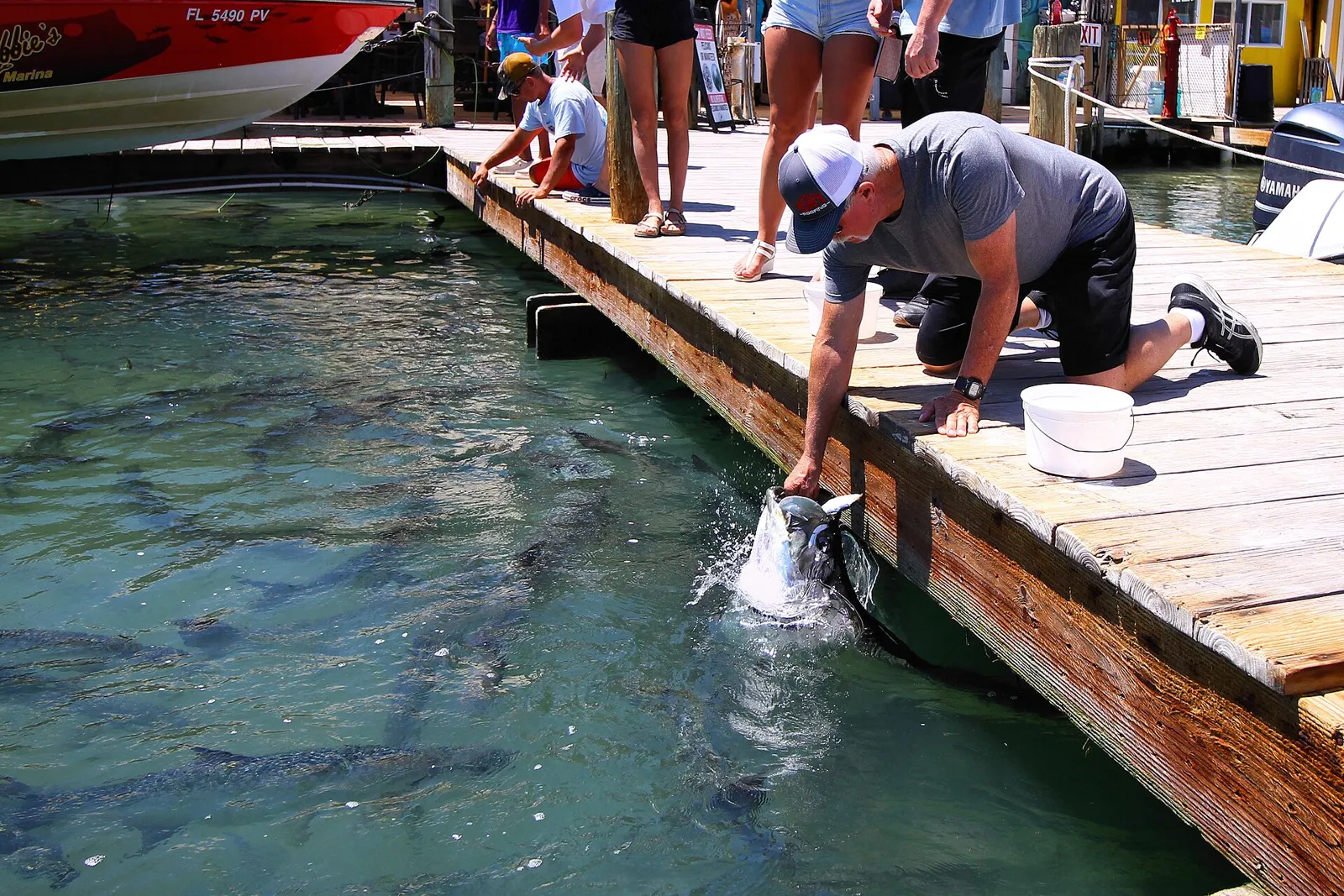
FWC says tarpon are found throughout Florida's coastal waters in summer and concentrate in South Florida when winter water cools. They spawn offshore between May and September. FWC's Tampa Bay catch-and-release study tracked released tarpon from Longboat Key to Anclote Key. Keeping a tarpon requires a tarpon tag bought in advance, and only in pursuit of a state record.
Sources: FWC · Tampa Bay catch-and-release study
Winter fishing
FWC describes protected winter water for snook and deeper, still water for trout.
Snook in protected water
FWC's snook sketch points to canals, bayous and deep river holes in winter. It says snook become lethargic below 65°F and suggests artificials in winter. On the coldest windy days, FWC recommends working a sandy bank or bar on the northeast shore of an upper-bay canal or bayou with a suspending twitchbait or plastic grub.
A Florida Sportsman piece quoting Capt. Kevin Little names deep bends in the Palm, Alafia, Little Manatee and Manatee rivers as winter refuges. He also describes mangrove-sheltered troughs and canals 6 to 10 feet deep. Little likes south-facing dark-bottom banks in winter. Keep his local approach separate from FWC's northeast-shore cold-day tip.
FWC generally recommends moving current, preferably outgoing. Little told Florida Sportsman he favors incoming water in early spring, then outgoing as water warms. For winter release, keep FWC's low-handling advice in mind and give cold-stunned fish room. Our Alafia River guide covers the river access behind those winter notes.
Redfish and trout
FWC's red drum profile places winter reds over seagrass, mud or sand, near oyster bars or spring-fed creeks. It suggests live shrimp under a popping cork and also lists soft jigs, spoons and topwater plugs. FWC's spotted seatrout profile says trout move into deeper, still water during cold months. It suggests live shrimp near the bottom around grass-bed holes.
FWC says trout are delicate. Release unwanted trout quickly.
Sheepshead around structure
FWC's sheepshead profile names oyster bars, seawalls and tidal creeks. It says they move nearshore in late winter and early spring to spawn. Its fishing tip is live shrimp, sand fleas or fiddler crabs on a small hook on the bottom. FWC also warns of sharp gill covers when cleaning.
Tampa Bay charter captains commonly report sheepshead around docks and pilings through winter, often best in February. Check pier access before choosing a rail in our piers and bridges guide.
Spring fishing
FWC describes snook leaving winter water and Spanish mackerel moving north in spring.
Snook leaving winter water
FWC says snook leave upper-estuary winter areas for spawning grounds in late spring and early summer. Little told Florida Sportsman to look at the first docks near canal mouths, small passes between mangrove islands and deep cuts on island backsides in early spring. He names the Cockroach Bay and Weedon Island areas.
FWC suggests live bait in spring and summer. Little's bait choices include scaled sardines, shrimp, pinfish, grunts and mud minnows. He also uses suspending twitchbaits, topwaters and soft plastic shrimp. Choose a setup before launching rather than carrying every option. Follow FWC handling guidance when releasing the fish.
Spanish mackerel and cobia
FWC's Spanish mackerel profile says they migrate north in spring and use inshore, nearshore and offshore water over grass beds and reefs. It suggests trolling or watching for diving birds, then small shiny spoons, dusters or jigs. Its tackle suggestion is 10 to 15 lb mono with a 30 to 60 lb mono leader for their teeth.
FWC's cobia profile lists inlets and bays, with fish around buoys, pilings and wrecks. It suggests live crabs or small fish near the surface and medium to heavy tackle. The profile describes spawning in spring and early summer. That biological timing is not a harvest opening.
Check the tide for access. Have release tools ready and follow FWC's handling method for the place you fish.
Summer fishing
FWC's summer notes cover snook near passes, trout over grass and coastal tarpon.
Snook near passes and lights
FWC documents snook spawning inside Tampa Bay near passes, including Terra Ceia and Miguel bays. At summer dock lights, its sketch recommends shrimp at the edge of the light, not in it. For bridge fishing at night, it suggests the first two to three hours of outgoing tide, anchored up-current and casting live bait to the base of pilings. That is boat-based advice, not a direction to block a pier rail.
Trout over grass
The FWC Tampa Bay mapping study found spawning most often in the lower bay and eastern middle bay, mostly over seagrass. FWC's species profile suggests drifting bait over grass with a float, or free-lining live shrimp, small pinfish or pigfish near the bottom around holes. Soft jigs, topwater poppers and spoons are also listed. Keep unwanted trout releases quick, as FWC advises.
Tarpon and the day's exit
FWC places tarpon throughout Florida coastal waters in summer. Its profile says they tolerate a wide range of salinity and juveniles commonly use fresh water. It suggests a long heavy mono leader. Tarpon fishing is almost entirely catch and release under the profile's guidance. Read current FWC rules before targeting them.
Florida State Parks' Skyway listing names snook, tarpon, grouper, black sea bass, Spanish and king mackerel, cobia, sheepshead, red snapper and pompano among catches. FWC's Florida pompano profile describes that species.
Fall fishing
FWC describes redfish spawning near passes and snook returning toward the upper estuary in fall.
Redfish and returning snook
FWC describes redfish spawning in passes, inlets and estuaries and snook returning toward the upper estuary in late summer and early fall. Its red drum bait tip remains live shrimp under a popping cork. Its snook sketch favors moving current, preferably outgoing.
Mackerel and cooler water
Tampa Bay charter captains commonly report fall kingfish and Spanish mackerel runs along the beaches. FWC says Spanish mackerel return south when water drops below 70°F. Watch the conditions and use the profile's small shiny lure suggestions if that is your target.
FWC handling guidance still applies when a run is busy. Keep release tools ready, handle little and do not delay an unwanted fish's return while resetting another rod. A seasonal report does not change current regulations.
Water temperature
FWC identifies two useful temperature notes: snook become lethargic below 65°F, and Spanish mackerel return south when water drops below 70°F. These describe fish behavior, not legal seasons. FWC also says trout use deeper, still water in cold months. After cooling weather, look at that habitat guidance rather than assuming fish stayed in the same shallow spot.
Tides
Use NOAA station 8726614, Alafia River North, for an Alafia outing. Near the mouth, the river guide also lists 8726572, The Kitchen. It identifies St. Petersburg 8726520 as the reference behind the Alafia subordinate station. Choose the station for your water rather than carrying one river prediction everywhere.
FWC's snook sketch recommends outgoing moving current and says four-tide days beat two-tide days. Little's early-spring incoming-tide preference remains attributed to him. A tide prediction helps with timing. Check the actual current and access when you arrive.
Release notes for every season
FWC's handling guidance says to wet your hands, handle fish little and support them horizontally. With natural bait and circle hooks, reel rather than set the hook. If a fish is gut-hooked, cut the leader close and leave the hook. From a pier, FWC says only lift fish you plan to keep, using a pier net or sling. Otherwise, cut the line close or walk the fish to shore.
Weather and lightning
The National Weather Service says to check the marine forecast and NOAA Weather Radio and head in when storms build. Leave room to end a summer afternoon outing early. Its lightning guidance says to go indoors when thunder roars and wait 30 minutes after the last thunder.
Seagrass and why it matters
The Tampa Bay Estuary Program calls seagrass nursery and feeding habitat for snook, redfish and seatrout. It reports about 31,500 acres bay-wide in 2024, below the 40,000-acre goal.
FWC's marine habitat guidance advises using a pole, paddle or electric trolling motor to avoid damaging shallow seagrass with a propeller. Plan the route across grass before entering it. Reaching a fishing spot is not a reason to damage the habitat described in the species profiles.
Cold snaps
FWC describes snook as tropical fish. It says they slow down below 65°F and use the upper estuary in winter. Give a cold-stunned fish room.
Licenses and regulations
Regulations change. Check FWC's current rules before you fish.
Snook · Tarpon · Regional maps
FWC’s current fishing rules. Regulations change.
What to wear
The FDA identifies 10 a.m. to 2 p.m. as peak sun. In every season, plan protection for exposed skin. A sun hoodie provides sun coverage, not fleece warmth. Choose other weather clothing separately for a cold outing.
For the crew, compare Men, Women and Youth. Check each product's own size chart before ordering.
Summer days are long, with little shade on the water. A long-sleeve sun shirt or hoodie covers arms and neck. Put sunscreen on exposed skin.
How to Choose a Fishing Sun Shirt · How to choose a fishing sun hoodie · Florida sun and a long day on the water · Alafia River fishing
FAQ
These answers cover the choices and advice discussed above.