
Florida sun and a long day on the water
Glassy at sunrise, blazing by ten, thunderheads by three. How to plan a Tampa Bay day around all of it.
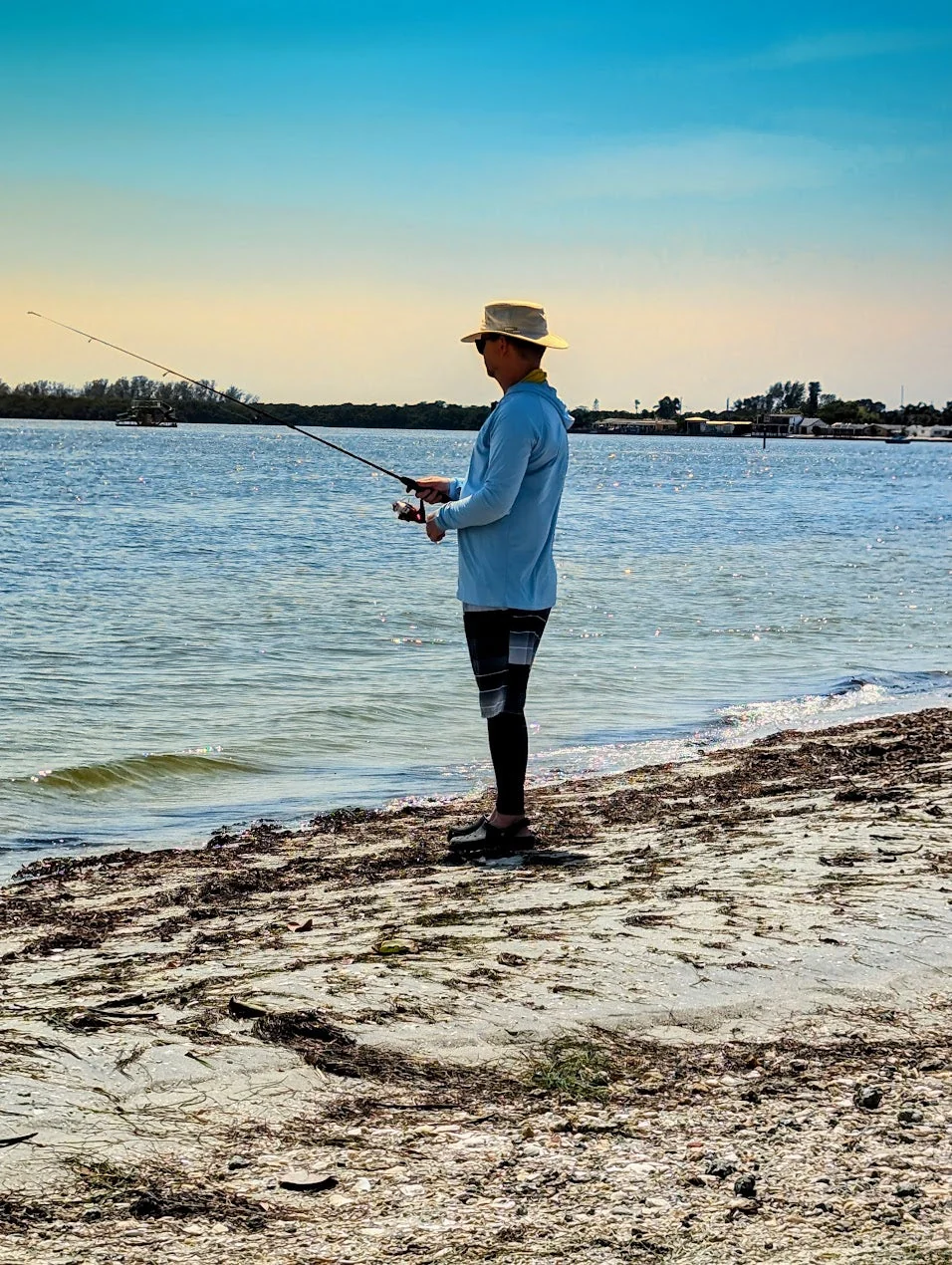
Sun on the water
The Skin Cancer Foundation says UV reflects off water and sand. Exposure does not come only from the sky above your hat. That is why a cap alone is not the whole sun plan. Cover the skin you can, then use sunscreen on what remains exposed.
The familiar summer outing starts at first light and can run into bright midday sun and building afternoon storms. Treat that as a planning problem, not a forecast for every Tampa Bay day. The National Weather Service says to check the marine forecast and NOAA Weather Radio and head in when storms build. Sun protection does not make bad weather safe.

The UV index and timing
Check the EPA UV index before leaving. Use it alongside the marine forecast, not instead of it. A temperature reading is not the same thing as a UV forecast. Choose your sun coverage before launching rather than waiting until the light feels harsh.
The FDA's sunscreen guidance identifies 10 a.m. to 2 p.m. as peak sun hours. Put that stretch on the day's plan. If you can make the trip shorter, plan the return before it. If you stay out, have the shade and sunscreen routine ready before midday.
A dawn-to-dusk plan by hour
This is a sample planning schedule, not a promise about weather or a requirement to stay out all day. Change the hours for the launch, the forecast and your crew. A day that ends early can still be the right plan.
- Before dawn: Check the marine forecast and UV index. Pack water and ice. Put on the sun layer and apply sunscreen 15 minutes before going outside, following FDA guidance.
- At sunrise: Check that your sleeves, hat or hood cover the areas you planned. Keep water and sunscreen accessible rather than buried under tackle.
- Around 8 a.m.: Use a pause in fishing to check exposed skin and the next sunscreen application. FDA says at least every two hours, so start the clock from when you applied it.
- 10 a.m. to 2 p.m.: This is the FDA's peak-sun window. Take shade breaks and drink water. Reapply on schedule and after swimming or sweating.
- Mid-afternoon: Watch for building storms. NWS says to head in when storms build. Do not let the remaining hours on this schedule keep you on the water.
- Late afternoon to dusk: Continue the sunscreen routine if you remain outside. Check the return plan and put away loose hooks before packing. End the trip when weather or the crew calls for it.
Clothing for the covered skin
The Skin Cancer Foundation explains that UPF measures how much UV fabric allows to reach your skin. UPF 50+ long sleeves are a way to cover arms and the upper body. Protection applies to covered skin. Our Anatomy of a Sun Shirt explains the Alafia sun-shirt features without treating a shirt as a substitute for exposed-skin protection.
The Skin Cancer Foundation recommends a wide brim of at least 3 inches. A sun hood is another way to cover the neck and ears when it is up. Check where your hat or hood leaves gaps. A hood is for sun coverage here, not fleece warmth. Use the sun-shirt buying guide to compare a crew neck with a hoodie.
A buff or gaiter and sun gloves are optional ways to cover areas your shirt leaves open. Treat them as packing choices, not a claim that any unlabelled fabric has a tested UPF rating. Polarized sunglasses are part of the existing water-day kit. Check their stated UV protection rather than using the word polarized as proof of it.
Put the clothing on and make a casting reach before the trip. Check where the sleeves and hem move. Use the size and fit guide and the chart on the product you are buying. Do not assume that a men's, women's or youth cut uses the same measurements. Browse Sun gear, Men, Women or Youth for the crew you are outfitting.
Sunscreen for what clothing doesn't cover
FDA recommends broad-spectrum sunscreen with SPF 15 or higher. The American Academy of Dermatology recommends SPF 30 or higher. Those are the two sources' recommendations, not a claim that UPF and SPF are interchangeable. Read the label on the sunscreen you choose.
FDA says about 1 ounce is needed for full-body coverage. Apply it 15 minutes before going outside. Reapply at least every two hours and right after swimming or sweating. Do not stretch the interval because you launched early or wore a shirt. The exposed skin still needs its own routine.
FDA says water-resistant labels specify 40 or 80 minutes. No sunscreen is waterproof. A water-resistant label is not permission to skip reapplication. Keep the product where you can reach it during a break. Read its directions before the outing rather than trying to work them out with wet hands.
The existing plan covers face, hands and ears with sunscreen, plus any neck area the clothing leaves open. Check those gaps when you put the hood up or take it down. Our UPF fishing shirt vs sunscreen guide keeps the two jobs separate. A covered arm and an uncovered hand do not have the same protection plan.
Wet clothing protects less
AAD's clothing guidance says wet clothing offers less sun protection than dry clothing. Do not assume a soaked shirt performs exactly as it did dry. Check the garment's stated rating and care guidance. This is general clothing advice from AAD, not a wet-performance measurement for an Alafia shirt.
As a packing suggestion, take a dry layer if the outing is likely to leave you soaked. Check coverage again after changing. Keep sunscreen for the exposed areas in the same accessible kit. Do not confuse a quick-drying product description with a claim that wet fabric never changes protection.
Heat and hydration
The National Weather Service's heat guidance says to drink water and rest in shade. Pack more water than you think you will drink, as the original launch checklist suggests. Make the breaks part of the trip rather than waiting until you have finished a long drift. Sun gear does not prevent heat illness.
NWS's heat-illness guidance lists heavy sweating, weakness, cool clammy skin, cramps, dizziness, nausea, headache and fainting among heat-exhaustion signs. Stop, move into shade and cool down. Get medical help if symptoms worsen. Do not make another cast first or try to solve worsening symptoms by changing shirts.
NWS lists confusion, slurred speech, hot red skin and loss of consciousness among heat-stroke signs. Heat stroke is a 911 emergency. Confusion or fainting needs urgent attention, not another cast. Call for emergency help rather than treating it as an ordinary water break. Keep your location clear enough that another person can explain where the crew is.
Lightning changes the plan
The National Weather Service's lightning rules say, “When thunder roars, go indoors.” Wait 30 minutes after the last thunder before returning outside. Do not wait for rain to reach the boat. NWS warns that lightning can reach away from the rain area, so hearing thunder is enough to change the outing.
Check the forecast before launching and keep checking the sky while fishing. The day plan can be dawn to dusk on paper and much shorter on the water. If the weather turns, the packing list and clothing choice are not reasons to stay. Head in when storms build, as NWS advises.
Before you launch
- Forecast: Check the marine forecast and UV index, not just temperature. Decide how you will leave if storms build.
- Water: Pack more than you think you will drink, and ice. Keep it within reach for breaks.
- Coverage: Put on long sleeves or a sun hoodie. Use sunscreen on face, hands, ears and other exposed skin.
- Extras: Bring a brimmed hat, polarized sunglasses and a towel for shade. Check stated UV protection on eyewear.
While you're out
Reapply sunscreen as the label says and after swimming or sweating. Take shade where you find it. Light reflects off the water too, as the Skin Cancer Foundation notes. Keep checking the crew, the sky and your return plan instead of treating the first-light setup as enough for the whole day.
Packing list
- Sun layer: A UPF-rated long sleeve or hoodie, with a dry spare as a practical option.
- Exposed-skin kit: Sunscreen with its label readable, a hat, and optional gaiter or gloves for the coverage you want.
- Water and breaks: Water, ice and a plan to rest in shade. Do not rely on sun clothing to prevent heat illness.
- Weather plan: The marine forecast, a checked return plan and the NWS thunder stopping rule.
- Fishing plan: Tackle for the chosen outing and release tools ready before a hookup. Use the other guides for location and fishing advice.
Sources
The sources linked in this guide are collected here.
What to wear
Long sleeves, sun hoods and Florida art, printed to order in UPF 50+.
Shop UPF 50+ sun gearFAQ
These answers cover the choices and advice discussed above.