
Anatomy of a sun shirt
What goes into a UPF 50+ fishing shirt, piece by piece.
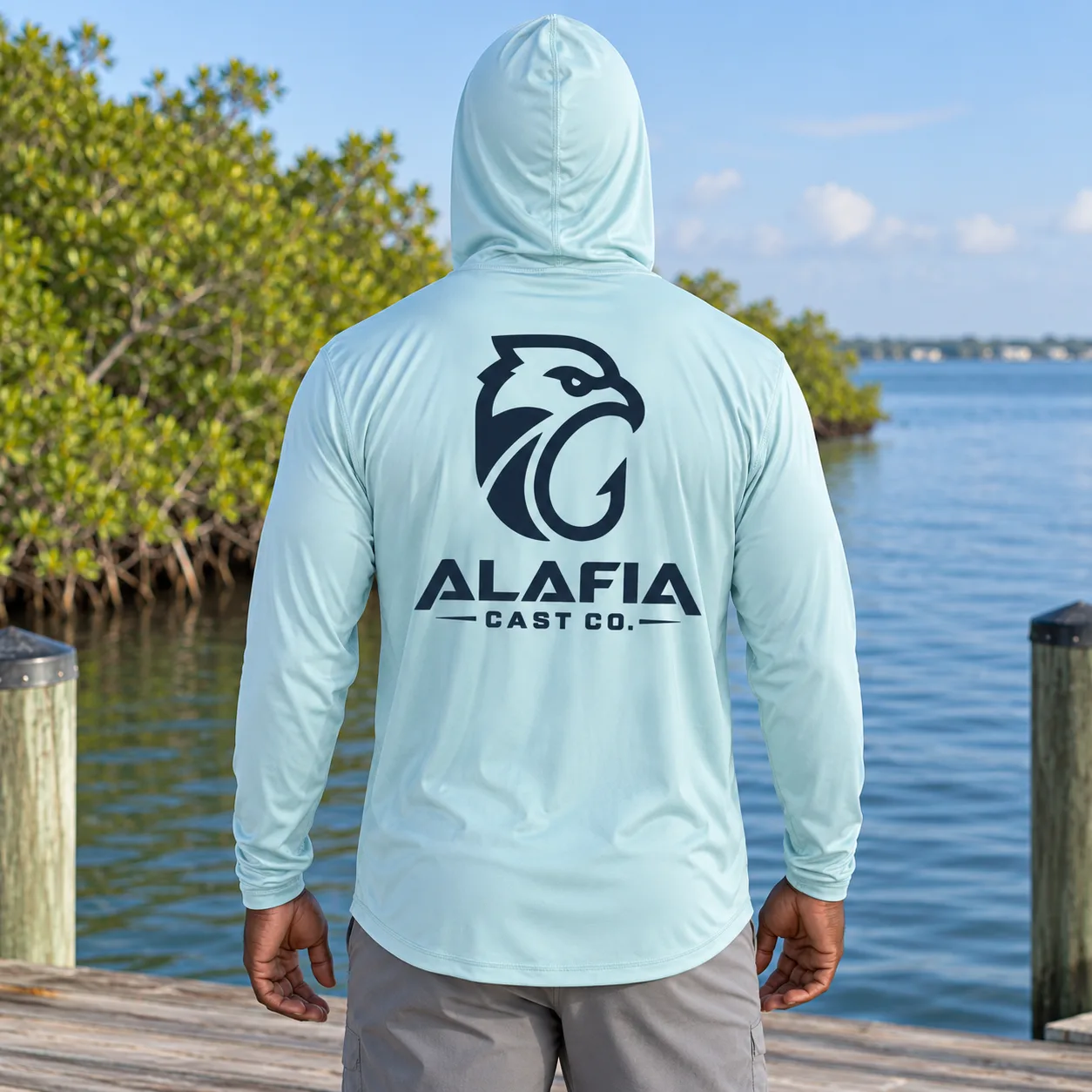
The anatomy
These are the sun-shirt parts and confirmed features, with Solar fabric claims attributed to Vapor. The Skin Cancer Foundation explains that UPF 50+ blocks about 98 percent or more of UV on covered skin.
The hood
Covers your neck and the tops of your ears when it's up. Check the coverage when you turn your head. It is a lightweight sun layer, not fleece.
UPF 50+ fabric
Blocks about 98% of UV on the skin it covers. We print on Vapor Apparel Solar blanks, and Vapor says that fabric carries the Skin Cancer Foundation's Seal of Recommendation.
Crew or hood neck
Crew if you'd rather keep it open under a cap; hood for midday and open water.
Long sleeves
Keep your arms covered down to your wrists on every cast.
Tapered wrists
Sleeves stay put when you reach for a long cast or lip a fish.
Moisture wicking
Vapor says PURE-tech technology wicks moisture through its Solar fabric.
Quick dry
Vapor says its Solar fabric is quick drying. That is not a promise about drying time after every spray or shower.
Odor resistant
Vapor says its Solar fabric is anti-microbial and odor resistant.
Fit
True to size, room to cast. Check the size chart on the product before you order.
Printed to order
100% polyester with a dye-sublimated print made after you order.
What UPF 50+ means
UPF rates fabric by how much UV gets through. UPF 50 lets about 1/50 of UV through, so about 98% is blocked, per the Skin Cancer Foundation.
Our blanks come from Vapor Apparel. Vapor says its Solar fabric carries the Skin Cancer Foundation's Seal of Recommendation.
Covered skin only. Your face, hands and any exposed ears still need broad-spectrum sunscreen. Bring a hat and polarized sunglasses too. Here's what a UPF shirt covers, and what sunscreen covers.
Hood vs. crew
A crew neck stays open under a cap. We wear it for an early launch or when we don't want a hood.
A hood gives your neck and the tops of your ears coverage when it's up. We take it for midday or a long drift on open water without shade. Read how to choose a fishing sun hoodie.
How to care for it
Follow the care label. Rinse the salt off after a day on the water, and give your shirt a chance to dry before you pack it away.
Fabric that's worn thin or stretched out won't cover like it did new. Keep an eye on the places that get the most use.
Why made to order
We print each shirt after you order it. Check the product’s chart before buying. Our refund policy states that all sales are final because each piece is printed to order.
How the fabric rating is tested
The AATCC labeling flowchart describes the U.S. process for UV-protective textiles. AATCC TM183 measures how much UV passes through a fabric sample with a spectrophotometer. That is a fabric test. It is not a measurement of the uncovered skin around a neckline or of every way a person moves while fishing.
DermNet describes ASTM D6544 conditioning to simulate about two years of use: 40 launderings plus UV exposure, with chlorinated water for swimwear. ASTM D6603 is the labeling guide. The label uses the lower of the new and conditioned results. That washing step is part of the rating process, not permission to ignore the care label.
DermNet notes that the U.S. labeling guide sets no minimum garment body coverage, unlike Australian and EU standards. A high fabric rating and a short sleeve can exist together. Check which skin the garment actually covers. A long sleeve helps cover an arm, but it does not turn an exposed hand into covered skin.
Polyester, wicking and print
Vapor says its Solar fabric has permanent SolarBloc UPF 50+ protection wet or dry, PURE-tech moisture wicking, quick drying, and anti-microbial and odor-resistant properties. Those are manufacturer claims about the Solar fabric used for our blanks. They are not a promise that a shirt stays dry through every drift or that it prevents heat illness.
Our confirmed sun-shirt fabric is 100% polyester. The Skin Cancer Foundation says lustrous synthetics such as polyester can reflect more UV than bleached cotton. That general comparison does not replace a garment’s UPF rating. Read the rating on the product, then treat wicking and drying as separate fabric features.
Vapor describes sublimation printing as dye going into the fabric. Our sun shirts use dye-sublimated prints and are printed after ordering. Do not treat the artwork as a second layer of sun protection. The fabric label is the protection information; the design is the design. Browse Men, Women or Youth for the cut and artwork you want.
Coverage while you cast
The Skin Cancer Foundation says loose fit protects better because tightly stretched fabric can let more UV pass through. Our fit advice is to check your reach as well as the chart. Raise your arms, reach forward and look at the wrists and hem. A true-to-size description is not a substitute for the exact product’s chart.
Tapered wrists are a confirmed feature of our sun shirts. Check where the sleeves end while moving instead of assuming they cover your hands. A hood covers the neck and ears while it is up. If you pull it down, those areas need a different sun plan. A crew neck stays open and pairs with a separate hat.
The Skin Cancer Foundation recommends a brim at least 3 inches all around. A cap’s front brim can pair with a hood, but it is not an all-around brim. Use the hoodie guide for that choice and the size and fit guide before ordering.
Wet fabric and ordinary tees
AAD clothing guidance says dry clothing offers better protection than wet clothing. The Skin Cancer Foundation gives a white cotton tee as about UPF 7 dry and about 3 wet. That example is about ordinary cotton, not a wet test result for our Solar fabric. Vapor’s stated wet-or-dry claim remains a manufacturer claim.
The Skin Cancer Foundation also describes dark or bright colors and dense fabric as useful protection factors. Do not guess a specific Alafia color’s rating from its appearance. A light shirt and a dark shirt should each be checked against their own listing. No extra UPF number is being assigned here to a print or color.
Care after a saltwater trip
Follow the garment’s care label for washing and drying settings. As practical performance-clothing care advice, rinse salt and sunscreen out after trips rather than packing a salty shirt away. Avoid ironing directly on prints. Skipping fabric softener is common care advice for wicking performance polyester; check the label rather than adding a treatment of your own.
MD Anderson’s UPF guidance discusses stretching and wear as factors that can reduce protection. Inspect worn or stretched areas rather than treating the original label as a lifetime guarantee. ASTM D6544 conditioning accounts for washing in the test process, but it does not test every possible treatment you might use at home.
Sunscreen for the day
The FDA recommends broad-spectrum SPF 15 or higher; AAD sunscreen guidance recommends broad-spectrum, water-resistant SPF 30 or higher. FDA says to apply 15 minutes before sun and reapply at least every two hours and right after swimming or sweating. Use it on skin outside the shirt.
Read UPF shirt vs sunscreen for that split and Florida sun and a long day on the water for the trip plan. Use the sun-shirt buying guide to choose a neckline. For locations, read Alafia River fishing, seasonal fishing, piers and bridges and family fishing.
Sources
The sources linked in this guide are collected here.
What to wear
Check the product’s chart before buying. Use sunscreen on exposed skin.
FAQ
These answers cover the choices and care steps discussed above.