
What to pack for a day on the flats
A plain checklist for a Tampa Bay boat or flats day: water, sun protection, eyes, required safety gear, first aid, a float plan and your license.
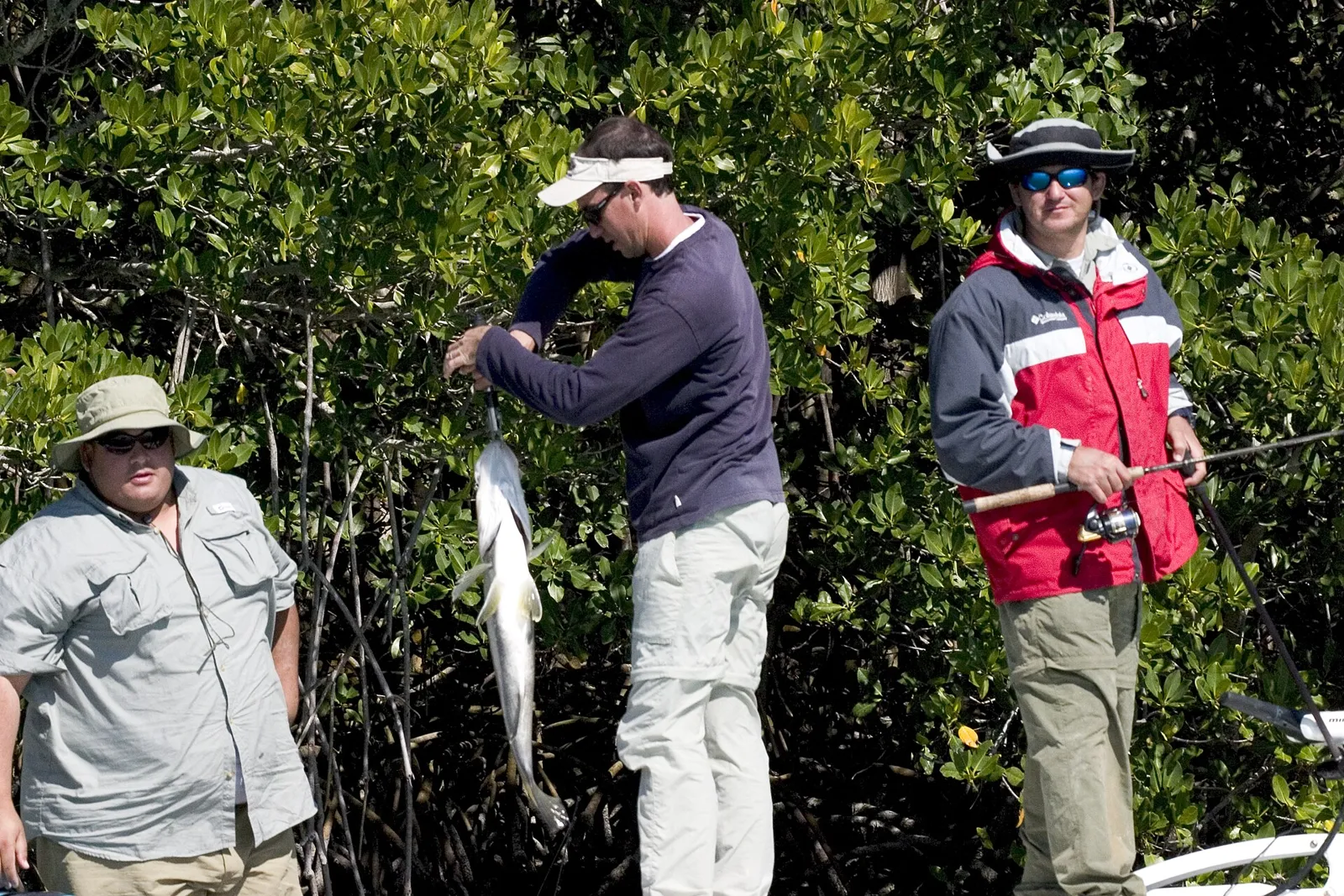
Start with water
Heat is what ruins most summer trips, not the fishing. The CDC says to carry water and keep drinking through the day, and to go easy on sugary, caffeinated and alcoholic drinks in the heat. It suggests checking urine color. Light yellow means you're drinking enough.
Freeze a few bottles the night before. They keep the cooler cold in the morning and turn into cold drinking water by afternoon.
Know the signs of heat illness
The National Weather Service separates heat illness into stages. Learn them before you need them.
- Heat cramps: Painful cramps and heavy sweating. NWS says to apply firm pressure and sip water unless nauseated.
- Heat exhaustion: Heavy sweating, weakness, cool clammy skin, dizziness or nausea. NWS says to move somewhere cooler, loosen clothing, use cool wet cloths and sip water.
- Heat stroke: Confusion, a very high body temperature or passing out. NWS calls it an emergency. Call 911 and cool the person right away.
Check the HeatRisk. NWS and the CDC publish a HeatRisk forecast that rates heat danger. Use it when planning summer days.
Sun protection
On the flats you get sun from above and glare from the water. Clothing is the first layer, sunscreen covers what clothing doesn't.
- Clothing: The FDA recommends long sleeves, pants, a hat and sunglasses, and limiting time in the sun from 10 a.m. to 2 p.m.
- Sunscreen: FDA recommends broad-spectrum SPF 15 or higher, applied 15 minutes before going out and reapplied at least every two hours. The AAD recommends SPF 30 or higher and water resistant. The Skin Cancer Foundation suggests SPF 50 or higher for a long day outdoors.
- How much: FDA and the Skin Cancer Foundation say about 1 ounce, roughly a shot glass, to cover the body.
Our UPF shirt vs sunscreen guide explains how the two work together, and sun gear is ours.
Protect your eyes
The American Academy of Ophthalmology says to choose sunglasses that block 99 to 100% of UV, and links long-term UV exposure to cataracts and growths on the eye. The AAO also says polarized lenses cut glare off water and recommends them for fishing and boating.
Polarized glasses are how you see fish on a flat. The AAO says larger or wraparound lenses protect more of the eye and the skin around it. Bring a strap and a backup pair.
Required safety gear
The Coast Guard's federal requirements guide covers life jackets, visual distress signals, fire extinguishers, ventilation, sound devices and navigation lights, depending on the boat. It also tells boaters to check state rules.
- Life jackets: Federal rules require at least one wearable Coast Guard approved life jacket for each person aboard.
- Kayaks too: FWC's paddlecraft page lists what a kayak needs. See our kayak guide.
- Free check: The Coast Guard guide says the Coast Guard Auxiliary and Power Squadrons offer free vessel safety checks.
First aid and the float plan
Pack a basic first aid kit that includes what you would need for hook cuts, catfish or stingray punctures and sunburn. Add the heat illness steps above. Our wading guide covers stingray stings.
Leave a float plan
The Coast Guard float plan is for every kind of boat, from kayaks up. Leave it with someone you trust, not with the Coast Guard. Include who is aboard, your boat, where you're going and when you'll be back, and call when your plans change or you're home. The Coast Guard has a printable form.
License and kit
FWC says you need a saltwater license to try to take any saltwater fish, whether you keep it or not, unless you're exempt. Its license page lists exemptions and where to buy. Keep it on your phone or in a dry bag.
- Clothing: Long-sleeve sun shirt or hoodie, hat or hood, buff, light pants, a dry layer for the ride home.
- Tools: Pliers, line cutters, dehooker, a landing net.
- Electronics: Charged phone in a waterproof case, a backup battery, a marine radio if you have one.
- Weather: Check the marine forecast and radar before you go and again on the water.
- Trash: A bag for trash and old line. Leave the flat cleaner than you found it.
Licenses and regulations
Regulations change. Check FWC’s license guidance and current fishing rules before you fish.
What to wear
Long sleeves, sun hoods and Florida art, printed to order in UPF 50+.
Shop sun gearFAQ
These answers cover the choices and advice discussed above.