
Fishing Fort De Soto Park
Two piers, miles of shoreline and a paddling trail at the mouth of Tampa Bay. How to plan a day of fishing at Fort De Soto.
Where the park sits
Fort De Soto is the park at the very bottom of Pinellas County, where Tampa Bay opens into the Gulf. Pinellas County describes it as 1,136 acres spread over five connected keys, with seagrass flats, mangroves, salt marsh and palm hammocks. That mix is why it fishes well. You can walk from deep, moving water to shallow grass in the same afternoon.
The park address is 3500 Pinellas Bayway S, Tierra Verde. The county runs it through Pinellas County Parks and Conservation Resources. There is a parking fee, and the county posts current payment details on its site.
Hours and park rules that matter to anglers
Most of the rules that trip people up are about time and place, not tackle. Read them once before your first trip.
- Hours: The county park rules list general hours of 7 a.m. to sunset, with closing times posted at each entrance. The piers keep later posted hours, covered below.
- Fishing areas: The county rules say fishing and swimming are allowed only in designated areas. Follow the signs at swim beaches.
- Alcohol and wildlife: Pinellas County says alcohol is not allowed on its park property and feeding wildlife is prohibited. That includes tossing bait scraps to birds.
- Pets: Pets stay on a leash no longer than 6 feet. Fort De Soto has the county's designated dog beach and dog park.
License first. FWC explains who needs a saltwater license, including the shoreline option for people fishing from land or a pier, on its license page. Check it before you go.
The Gulf Pier
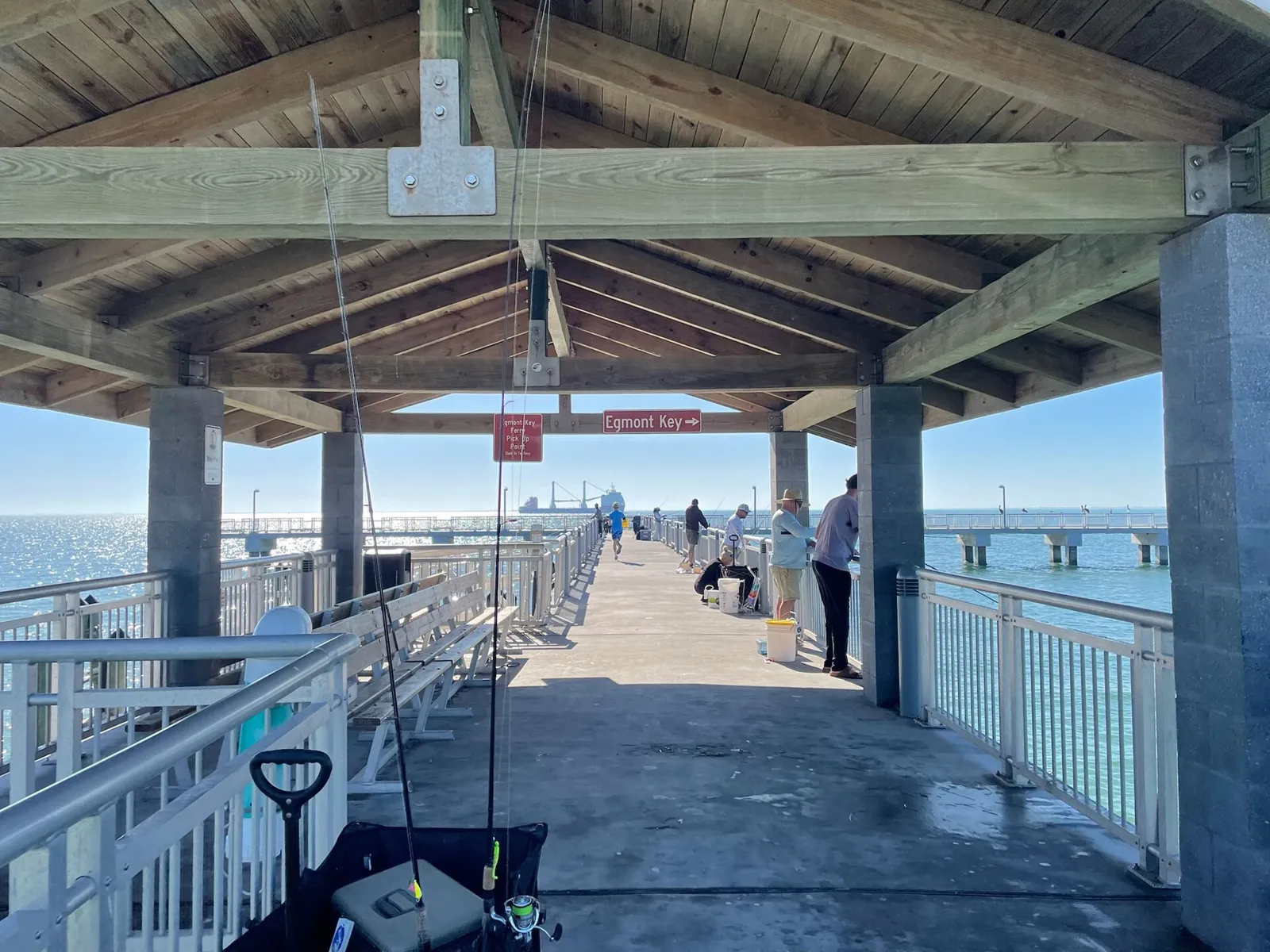
The Gulf Pier is the long one. The park's own pier page puts it at 1,000 feet, reaching into the channel between Mullet Key and Egmont Key next to the historic fort parking lot.
What you'll find there
FWC's Gulf Pier survey record lists a bait and tackle shop, restrooms, ADA access, picnic space, fresh water, a fish cleaning table and monofilament recycling. It lists posted hours of 7 a.m. to 11 p.m. Hours can change, so check the sign when you arrive.
What people catch
VISIT FLORIDA's Fort De Soto fishing guide says the Gulf Pier's open water draws sheepshead and sharks, and that it is a good place to watch dolphins. Expect current. Bring enough weight to hold bottom and a pier net or a plan for landing fish from height.
The Bay Pier
The Bay Pier is the calmer choice. The park's pier page describes it as 500 feet long, reaching into the currents that flow in and out of Tampa Bay, with more sheltered water and lighter current than the Gulf Pier.
FWC's Bay Pier survey record lists the same kind of facilities, with posted hours of sunrise to 11 p.m. VISIT FLORIDA says the Bay Pier favors inshore fish like spotted seatrout, redfish and snook on lighter tackle, and also mentions Spanish mackerel, ladyfish, pompano, permit and the occasional tarpon.
Which pier for kids?. The Bay Pier's lighter current makes it easier for small hands and light rods. Our family fishing day guide covers the rest of the plan.
Shoreline and wading
You do not need a pier to fish here. FWC's county parks listing notes extensive shoreline fishing at Fort De Soto in addition to the two piers.
Shoreline fishing means grass and sand, and sand means stingrays. Shuffle your feet, wear shoes you can wade in and keep an eye on the tide. Our wade fishing guide goes deeper on reading flats and staying safe in shallow water.
Paddling and the canoe trail
The park's brochure and map shows a canoe and kayak launch and a self-guided 2.25-mile canoe trail through the back waters. Rentals are available on site through Topwater Kayak Outpost, which lists first-come, first-served rentals during posted hours.
The 2024 park map marks a no-vessel zone and a combustion motor exclusion zone near North Beach and shorebird habitat. Respect them on a paddleboard or kayak too. If you want to fish from a kayak, read our kayak fishing guide for launches, safety gear and wind planning.
Wildlife and seagrass
Fort De Soto is a wildlife park first. Pinellas County says more than 328 bird species have been documented there, and the beaches give loggerhead sea turtles a place to nest. Fishing near birds means watching your backcast and never leaving line behind.
The waters around the park include mapped seagrass beds and manatee zones. The Tampa Bay boaters and anglers guide asks boaters to avoid scarring seagrass, and FWC explains manatee protection zones. If you hook a bird or see a hurt animal, our wildlife guide covers what to do.
Weather moves in fast. Both piers are exposed. When storms build or thunder starts, get off the pier. Our summer storms guide explains the National Weather Service's advice.
A first visit
Here is how we would set up a first visit. Adjust it to the tide and the forecast, not the other way around.
- Before you leave: Check the forecast, the tide and current FWC rules. Buy or renew your license.
- Arrive early: Park hours open at 7 a.m. Morning is cooler and usually calmer.
- Pick one spot: Gulf Pier for current and bigger water, Bay Pier for lighter tackle, shoreline for room to move.
- Cover up: Piers have little shade. Long sleeves, a hat and sunscreen on exposed skin. See sun gear.
- Leave nothing: Use the monofilament bins and take your trash out with you.
Licenses and regulations
Regulations change. Check FWC’s license guidance and current fishing rules before you fish.
What to wear
Long sleeves, sun hoods and Florida art, printed to order in UPF 50+.
Shop sun gearFAQ
These answers cover the choices and advice discussed above.