
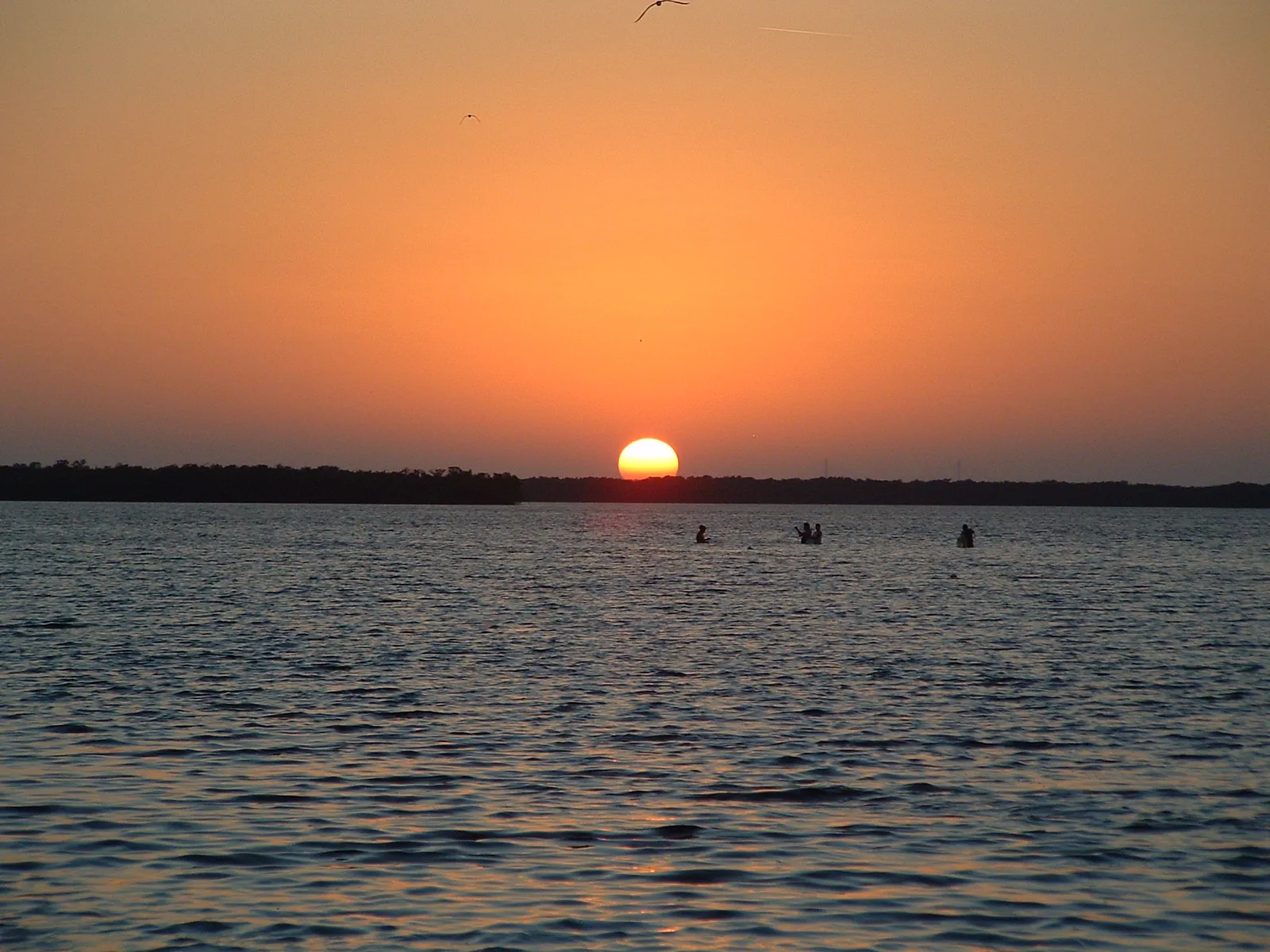
Late October at Cockroach Bay
A late October trip to the Cockroach Bay islands: what is still open in the Tampa Bay region, how small the tide is, and how to cross the grass without cutting it.
What's open
In the Tampa Bay region, snook is open. FWC closes it December 1 through the end of February, and again May 1 through August 31.
The slot is not less than 28 inches and not more than 33 inches total length. The bag is one fish per person per day. You need a snook permit on top of a recreational saltwater license. Legal gear is hook and line only. The fish stays whole until it is landed ashore. On a for-hire trip the captain and crew may not keep a bag.
Redfish and spotted seatrout stay open all year in this region. The numbers are on the pages below. Our season guide follows these fish from winter through fall. This page is the trip to the islands.
Getting there
Florida State Parks describes Cockroach Bay Preserve as islands in southeast Tampa Bay, in the mouth of the Little Manatee River, running south along the shore. You reach them only by water. Two canoe and kayak trails wind through the aquatic preserve around the islands.
The islands cover 617 acres. About 500 of those acres are mangrove swamp. There is no fee. Hours are 8 a.m. to sunset. The islands have no facilities. Pack it in and pack it out.
The ramp
The nearest public boat ramp is west of U.S. 41 at the end of Cockroach Bay Road in Ruskin, four miles north of the Manatee County line. That ramp is the put-in. The islands are the destination.
The park says horseshoe crabs were once so common on this coast that early Spanish explorers called them cockroaches. That is the name story the park publishes.
Reading the tide
NOAA's tide station in Cockroach Bay is 8726425, at 27.6783 N, 82.5033 W. Predictions are controlled by St. Petersburg, station 8726520.
The accepted datums use the 1983 to 2001 epoch. NOAA accepted them on March 15, 2011, from a series in August 1990. The mean range of tide is 1.22 feet. The great diurnal range is 1.67 feet. A foot and a half is the difference between floating and sitting on the flat. Read the day's prediction before you leave the ramp.
Moving current
FWC's snook sketch says to fish snook in moving current, preferably on the outgoing tide. It says four-tide days beat two-tide days, because a two-tide day has slow current and a weak bite. The places it names are cuts between islands, points next to sandbars, and channels through the flats.
That is general snook advice, not a promise about one shoreline in Ruskin. On a 1.22 foot mean range, the moving water does not last long.
Redfish
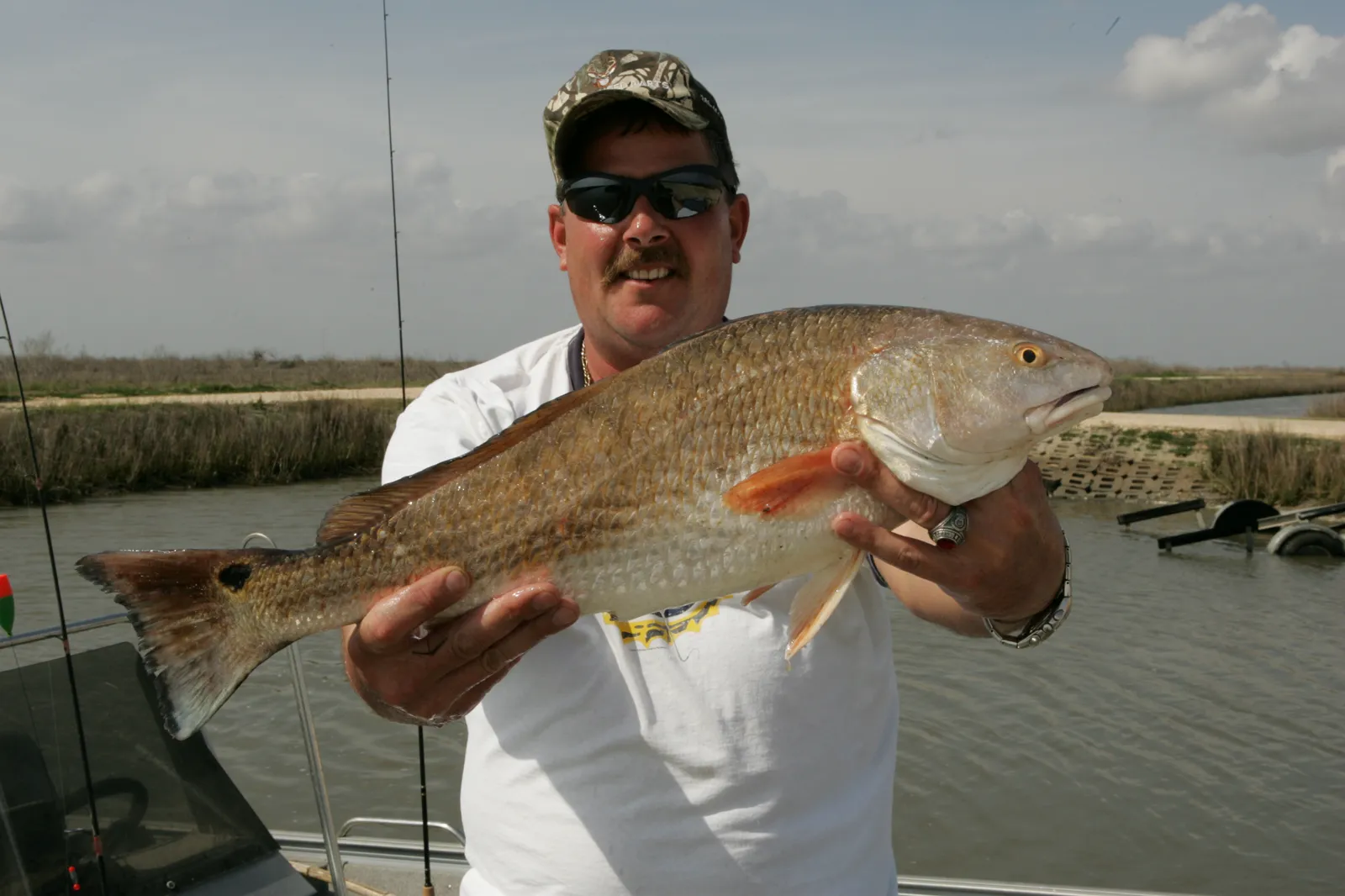
In the Tampa Bay region, FWC keeps redfish open year-round. The slot is not less than 18 inches and not more than 27 inches total length. The bag is one fish per person, with a two fish vessel limit. The fish stays whole until it is landed ashore. On a for-hire trip the captain and crew may not keep a bag. Legal gear is hook and line or a cast net. Spearing is illegal. So is a multiple hook used with live or dead natural bait.
FWC's species profile says spawning runs from about August through December, in passes, inlets and lagoon estuaries. Late October sits inside that window. In winter the profile puts redfish in seagrass, over muddy or sand bottom, near oyster bars, and in spring-fed creeks.
The same profile names a live shrimp under a popping cork, plus crabs, mullet, pinfish and killifish. It also names soft-bodied jigs, spoons and topwater plugs. It does not name Cockroach Bay as a spawning site.
Spotted seatrout
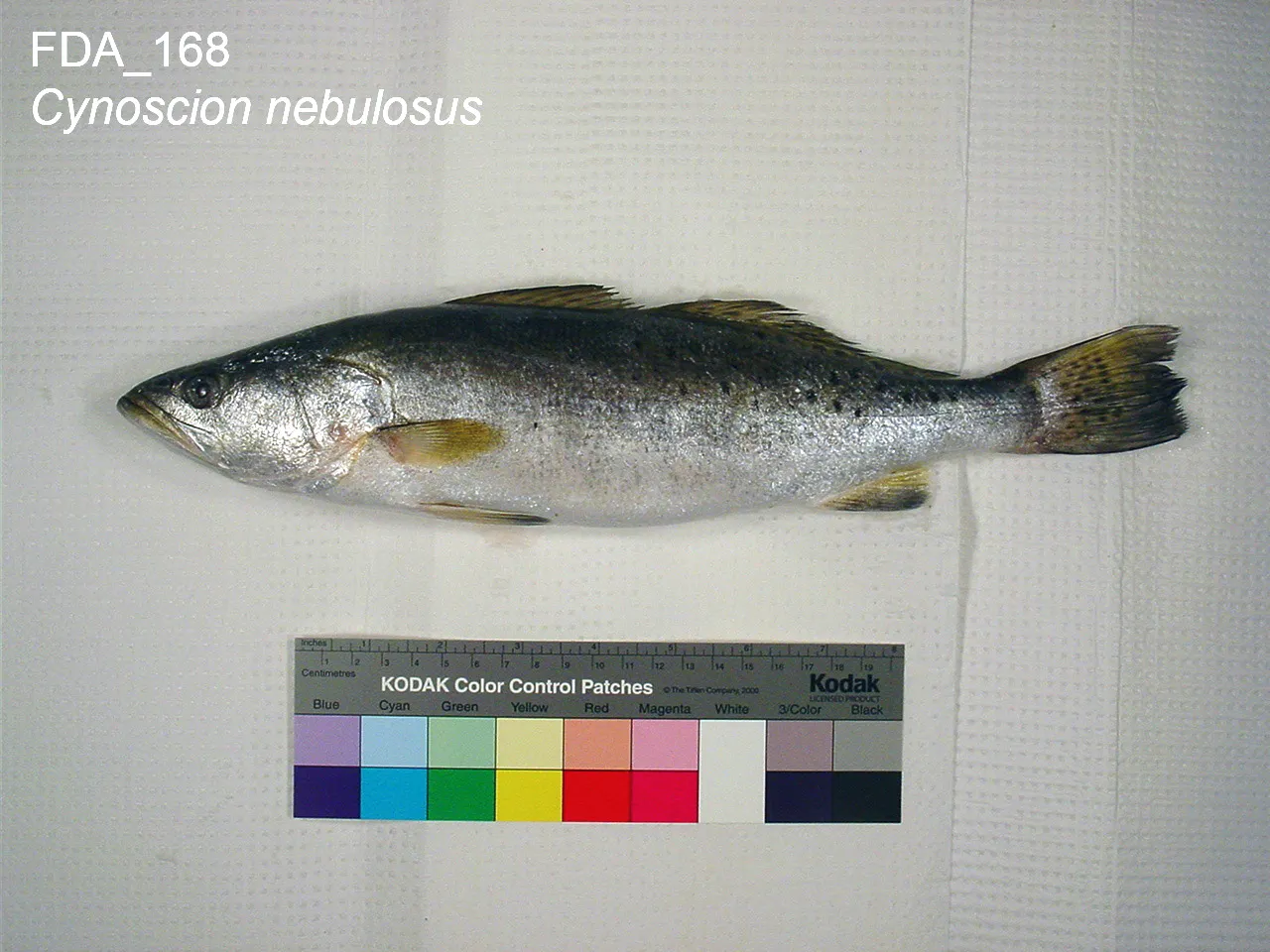
Spotted seatrout in the Tampa Bay region are open year-round. FWC sets the slot at not less than 15 inches and not more than 19 inches total length. You may keep one fish over 19 inches per vessel. From shore, that oversized fish is one per person. It counts in the bag. The bag is three fish per person per day.
The fish stays whole until it is landed ashore. Hook and line and cast nets are legal. A multiple hook with natural bait is not. Snatching is not. On a for-hire trip the captain and crew may not keep a bag.
FWC's Tampa Bay mapping study says the spawning season typically starts in late March and ends in late September. By late October that season is over. Spawning showed up through Tampa Bay except Hillsborough Bay, most often in the lower bay and the eastern middle bay, and most often over seagrass. The study mapped sound. It did not map an October bite.
The grass and the mangroves
A December 2022 report from UF/IFAS, Auburn and the Tampa Bay Estuary Program counted almost 24,000 propeller scars. Scarring was heavy in lower Tampa Bay, including Cockroach Bay south of Ruskin. Sheila Scolaro of the Estuary Program said seagrass provides food and habitat for fish and wildlife.
FWC's marine habitat page says seatrout and redfish spend time in seagrass meadows. It tells boaters to pole, paddle or use an electric trolling motor in shallow grass, and to pole or drift instead of cutting a scar. Quenton Tuckett at UF/IFAS adds a short list: know the marks, know the tide, slow down and lift the prop, know your draft, and wear polarized glasses.
About 500 acres of these islands are mangrove swamp. FWC's snook sketch says small, immature snook use quiet mangrove-lined swamps and bayous, with shade and cover. The sketch does not inventory this park. FWC has documented snook spawning inside Tampa Bay near Terra Ceia Bay, Miguel Bay and the Port Manatee spoil island. Cockroach Bay is not on that list.
The sketch also says mature gulf-coast snook leave upper-estuary winter water in late spring, spawn through summer, and return to the upper estuary in late summer or early fall. Below 65°F they turn lethargic. Late October can still be the tail of the spawn, or the start of that move up the rivers. The sketch does not assign a date to Cockroach Bay.
Read this station. A generic Tampa tide will not match Cockroach Bay. The mean range here is 1.22 feet.
Before you leave the ramp
FWC's license page explains who needs a saltwater license and who is exempt. Keeping a snook also takes a snook permit. FWC says to read the current rules before you buy the permit, because the sale is final.
FWC's red tide FAQ says red tides most often form in late summer or early fall. Our red tide guide has the status map and the rules on what not to eat. Check it the morning you go.
If you paddle the trails instead of running a skiff, our kayak guide covers the required life jacket, whistle and light. A long day on open water is a sun day, on this flat or any other coast. Sun gear is the UPF layer for that kind of day.
Licenses and regulations
Regulations change. The Tampa Bay region numbers above come from these FWC pages.
Snook · Redfish · Spotted seatrout
FWC’s current fishing rules. Regulations change.
What to wear
Long sleeves, sun hoods and Florida art, printed to order in UPF 50+.
Shop sun gearFAQ
These answers cover the choices and advice discussed above.