
Tarpon around Tampa Bay
What FWC research says about the silver king, the catch-and-release rules every tarpon angler should know, and how to handle a big fish so it swims away.
About tarpon
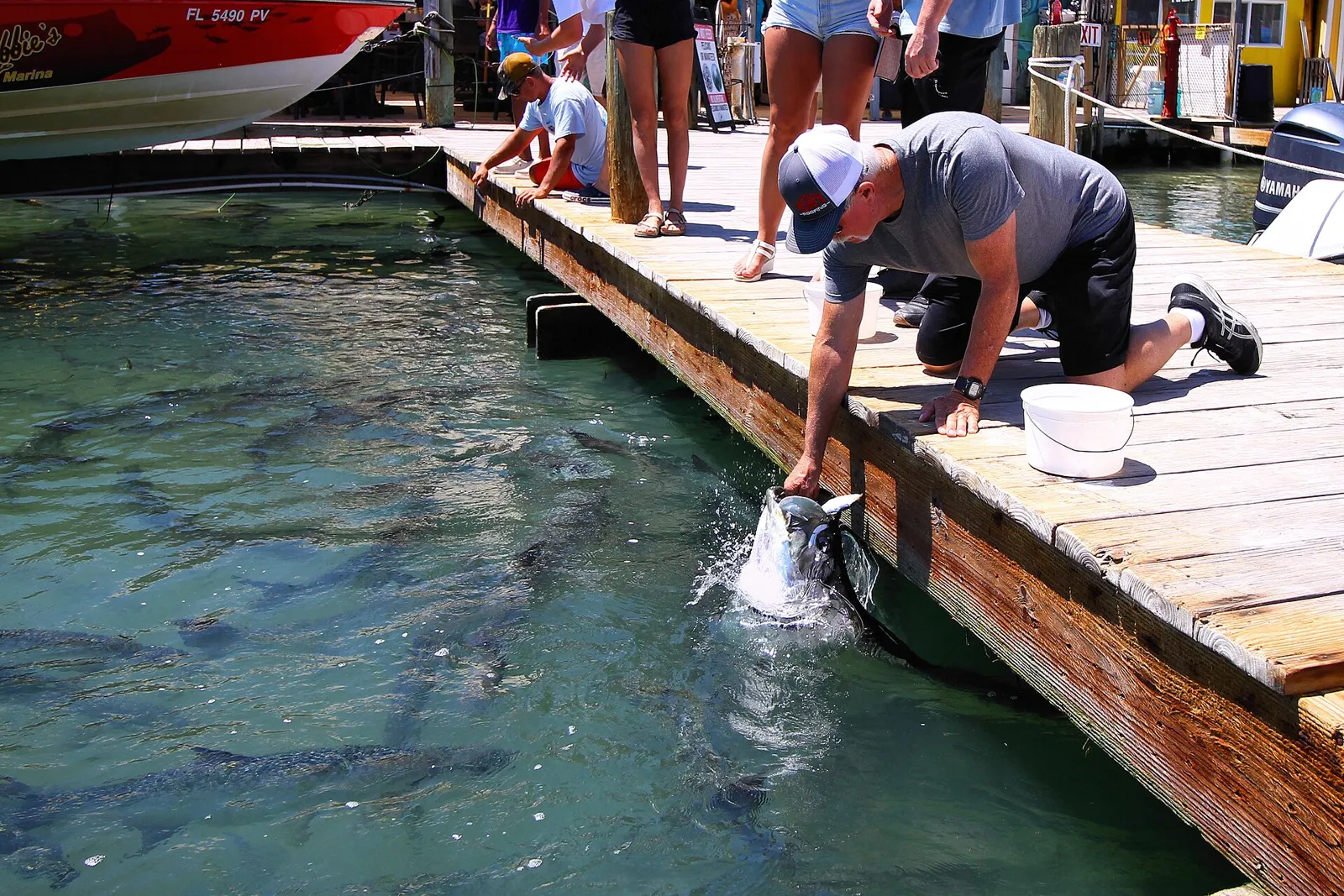
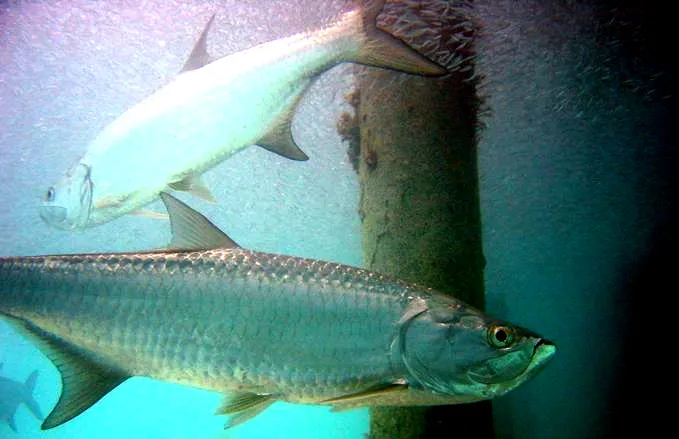
Ask an old Tampa Bay angler about tarpon and you'll get a story. The fish is big, ancient-looking and famous for jumping. FWC keeps a full tarpon research section on Atlantic tarpon, Megalops atlanticus, covering its life history and biology.
Tarpon matter to this area for another reason. FWC's catch and release study ran at Boca Grande Pass and then moved to Tampa Bay, using acoustic telemetry to follow released fish. A lot of what anglers now know about handling tarpon came out of local water.
Where tarpon show up
Tarpon move along the beaches, through the passes and into the bay. Two places come up again and again.
Boca Grande Pass
Florida State Parks describes Boca Grande Pass as connecting Charlotte Harbor to the Gulf and reaching about 80 feet deep. Florida Sportsman reports that FWC tracking work has estimated as many as 10,000 adult tarpon can gather there. FWC's tarpon page lists special gear rules for the pass, so read them before you go.
The mouth of Tampa Bay
The same Florida Sportsman piece says the area near the mouth of Tampa Bay is increasingly recognized as holding as many or more tarpon, just spread over more water. Tampa Bay charter captains commonly report fish along the beaches, in the passes and around big structure like the Skyway. Our piers and bridges guide covers that structure.
Tarpon timing
Tarpon timing depends on water temperature, fronts, tides and moon, so it shifts year to year. Here is what local captains say, attributed and not a fixed calendar.
- Early fish: A Palmetto tarpon guide quoted by the Bradenton Herald said the first weeks of the migration can be inconsistent because of lingering cold fronts.
- The run builds: The same guide said numbers get more consistent as spring turns to summer. A Tampa Bay charter's tarpon calendar describes resident fish earlier in the year and the larger migration building along beaches and passes through spring and summer.
Our seasonal guide puts tarpon alongside snook, redfish and trout through the year.
The rules in plain terms
Tarpon rules are simple at their core and specific in the details. Read FWC's tarpon page and tarpon FAQs for current details.
- Catch and release: FWC says tarpon are catch and release only, except for one tagged fish taken while pursuing a state or world record.
- Tags: FWC limits tarpon tags and explains how they work for anglers and charter captains.
- Hook and line only: FWC prohibits snagging, snatch hooking and spearing tarpon, and bans multiple hooks with natural bait.
- Federal waters: FWC says Florida's tarpon rules extend into adjacent federal waters.
Keep big fish in the water. FWC says large tarpon must stay in the water unless you are pursuing a record with a tag. Its tarpon page gives the exact size. FWC also says to keep tarpon, especially the gills, in as much water as safely possible.
Handling a tarpon the right way
FWC developed its tarpon handling advice with Bonefish and Tarpon Trust and Salt Strong. FWC's tarpon release article and BTT's best practices cover the same ground.
Before and during the fight
- Match your tackle: Heavy enough to land the fish quickly. FWC's fish handling page says to land large fish like tarpon within about 20 minutes.
- Circle hooks: FWC recommends non-offset, non-stainless, barbless circle hooks with bait.
- Short fights in warm water: BTT says to shorten fight time when the water is warm.
- Watch for sharks: FWC says to be shark aware when releasing. A tired tarpon is an easy meal.
At the boat
- Wet hands, no gills: BTT says to keep fingers away from the gills and avoid lip grippers on active fish.
- Dehooker ready: FWC recommends a long-handled dehooking tool. If the hook is deep, BTT says cut the line close.
- Revive it forward: BTT says to move a tired fish forward so water passes front to back over the gills until it swims off.
The photo. BTT's rule of thumb for smaller tarpon: if you lift one, support it under the head and belly, and the photo should show water still dripping off the fish. Big fish stay in the water for the picture.
What to wear for tarpon days
Tarpon trips mean long waits in full sun on open water, often at midday on the beaches. Cover up with a long-sleeve sun shirt or hoodie, polarized glasses and sunscreen on exposed skin. Summer tarpon weather is also storm weather. Read our storms guide before you go.
Licenses and regulations
Regulations change. Check FWC’s license guidance and current fishing rules before you fish.
What to wear
Long sleeves, sun hoods and Florida art, printed to order in UPF 50+.
Shop sun gearFAQ
These answers cover the choices and advice discussed above.