
Winter sheepshead on Tampa Bay
Where sheepshead stack up around Tampa Bay in winter, what to put on the hook, how to catch a fish that steals bait without a twitch, and the FWC rules for keeping a few.
The bite you won't feel
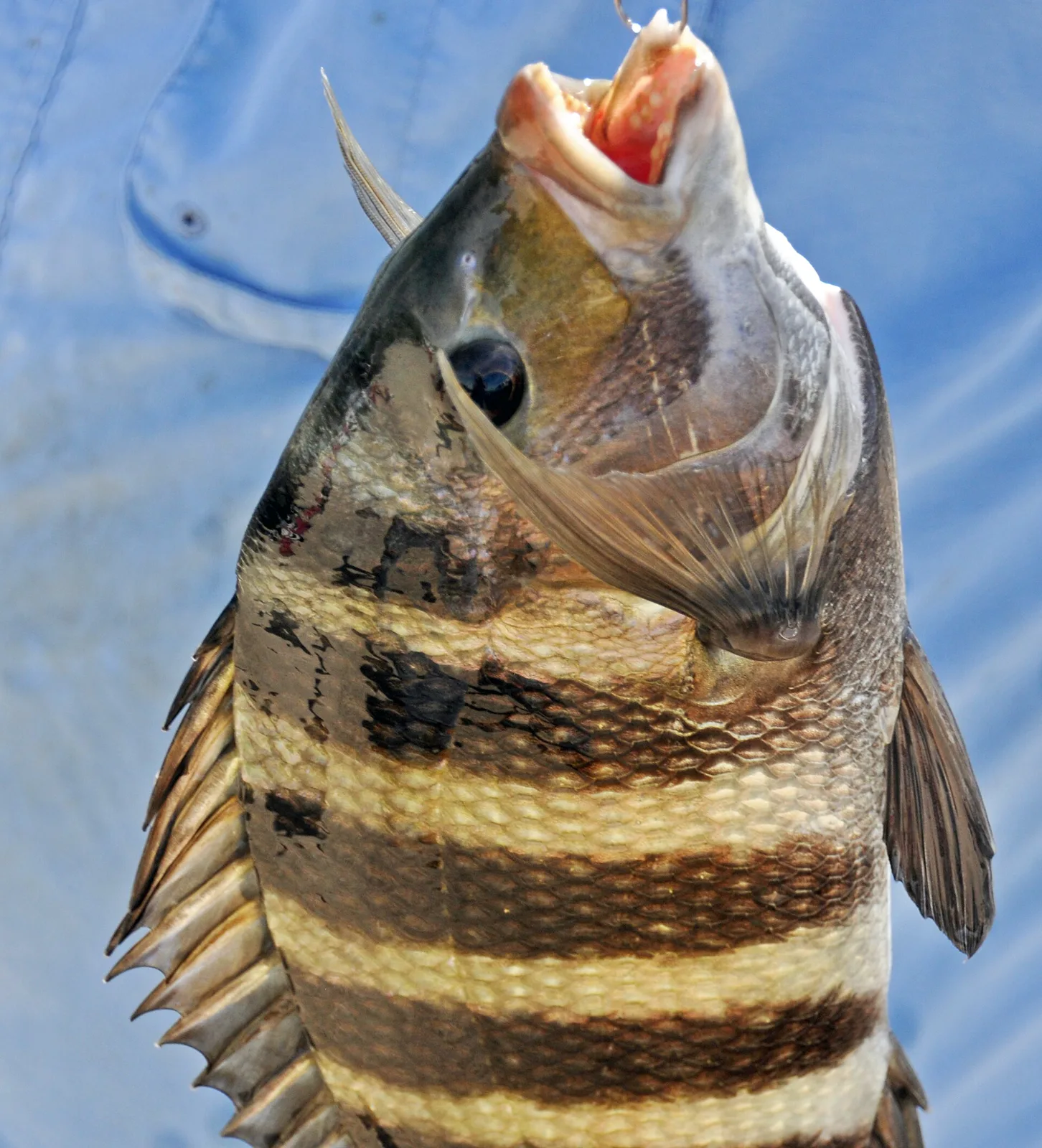
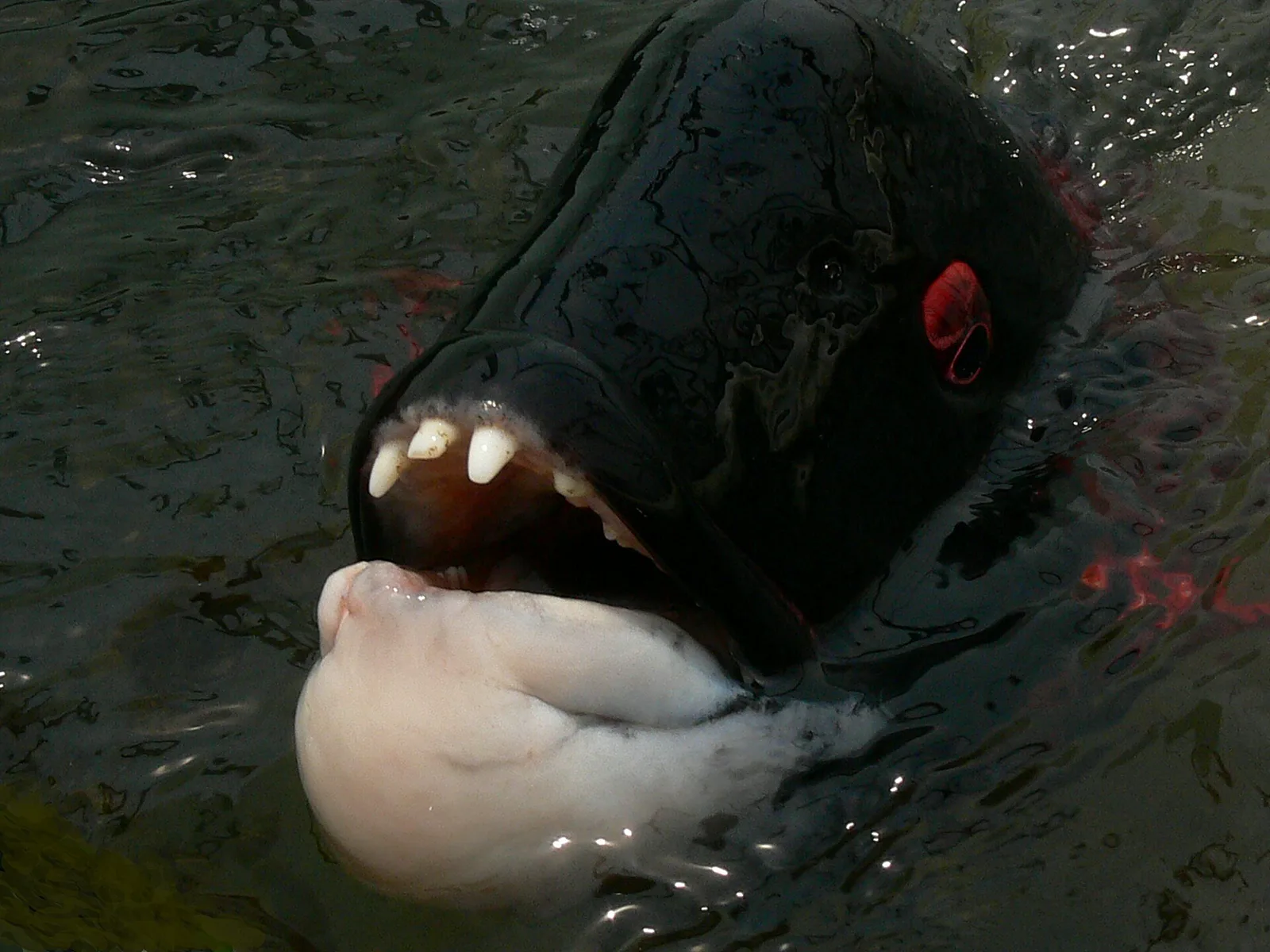
Most sheepshead that get away were never hooked. The angler was waiting for a bite that wasn't coming. A sheepshead doesn't run off with your bait. It sits beside the piling, nips the bait with front teeth that look a little too human, and crushes it with the molars behind them. Your rod tip barely moves. By the time it bends, your bait's gone.
That puzzle is the whole fun of this fish, and winter is when it pays to solve it. Snook closes in the Tampa Bay region on December 1 and stays shut through the end of February, per FWC's snook rules. Redfish and trout stay open, but plenty of locals spend the cold months on sheepshead instead. They're open all year, you can keep a few, and you can reach them from a pier.
Why the cold bunches them up
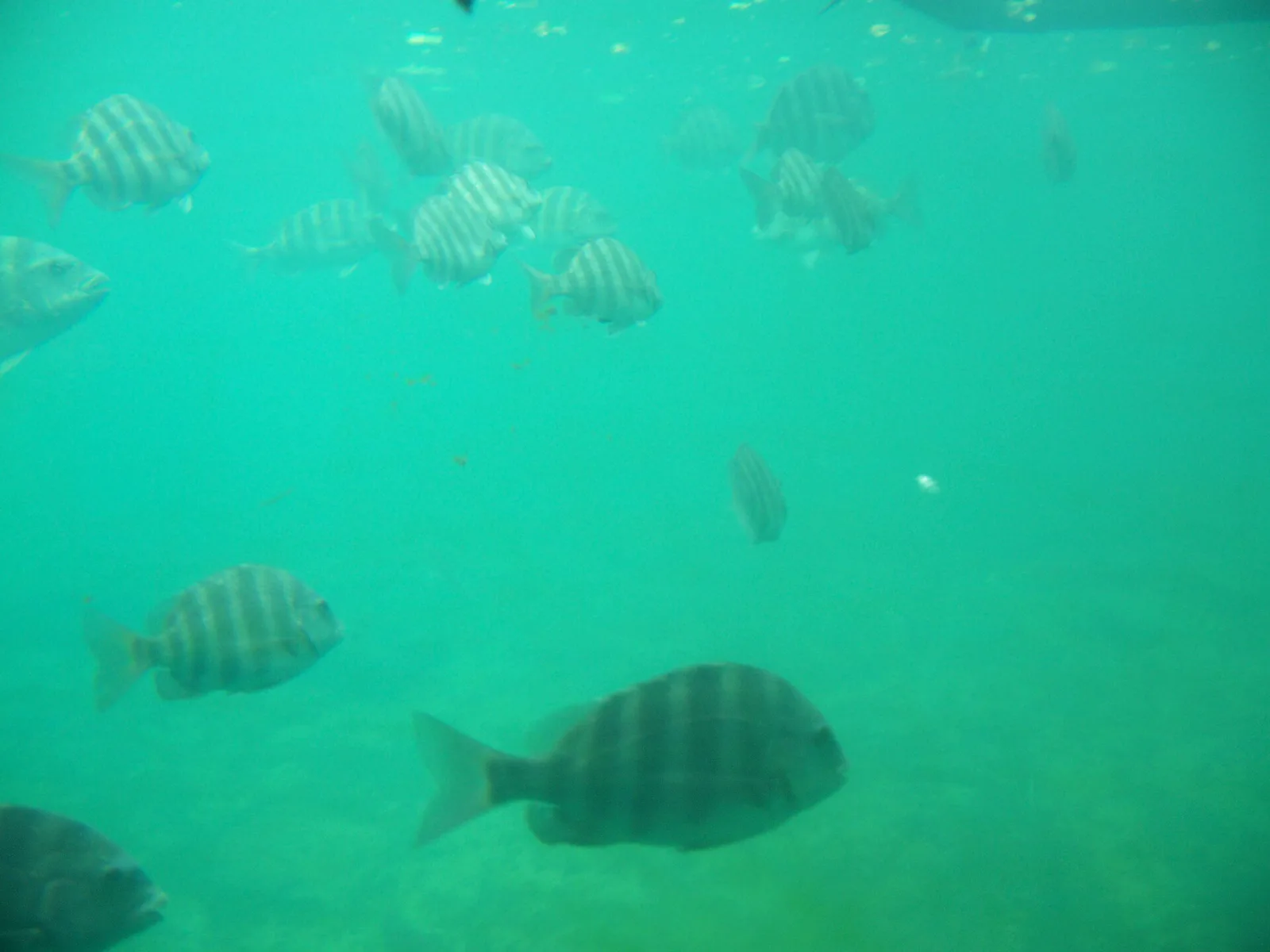
Sheepshead live on structure all year. When the water cools they go looking for warmer water near river mouths and spring outlets, sometimes right up into fresh water. Late in winter they move nearshore to spawn, mostly in March and April, and some head out to artificial reefs and channel markers. So for a few months they're packed onto hard structure, and winter sheepshead fishing mostly comes down to finding the right posts.
Where to look
Anything hard with growth on it. Bridge and pier pilings, dock posts, seawalls, riprap, oyster bars. Adults scrape barnacles off the pilings and crunch oysters, clams and blue crabs, so when you're choosing between a crusty piling and a clean one, go crusty.
You don't need a boat. Fort De Soto's Gulf Pier is a known sheepshead spot, and our Fort De Soto guide covers both of the park's piers. The piers and bridges guide runs through the rest of the bay's public piers. River mouths fit the warm-water pattern too, and the Alafia River guide has the access points on our home river.
What to put on the hook
Live shrimp, sand fleas or fiddler crabs on a small hook, on the bottom. That's the recipe. Crabs and sand fleas outlast shrimp when pinfish show up, and on Tampa Bay the pinfish always show up.
Go small, strong and sharp on the hook, and leave the point showing so it has something to catch. Add just enough weight to get down and hold beside the piling, tie on a short leader, and keep your line straight down. The fish are on the structure. A long cast away from it mostly feeds the pinfish.
Barnacles make good chum, and the rules on them are looser than you might think. Barnacles have no size or bag limit, so with a saltwater license you can take up to 100 pounds a day. Oysters are a different story, with seasons, limits and approved harvest areas, so leave those on the post. Check the pier's own rules before you start scraping its pilings.
Setting the hook
Keep the line tight and the rod tip low, close to the structure. The bite is a light tap, a scratchy feeling, or the line just getting heavier. Set on that first signal with a short, firm lift. Don't wait for a second tap. There usually isn't one.
Once it's on, turn its head away from the pilings, because barnacles cut line fast. On a high pier, bring a pier net. A straight lift is how the bigger ones tear off.
Mind the spines. The dorsal and anal fins carry strong, sharp spines, and the gill covers will slice you at the cleaning table. Grip from the belly side, or use a towel.
Sheepshead or black drum?
The black bars on a pale body earned it the nickname convict fish. Young black drum wear bars too, and so do Atlantic spadefish, so stripes alone won't settle it. A sheepshead's bars fade as it ages anyway. Look at the chin and the teeth. A black drum has barbels under its chin, and neither the drum nor the spadefish has those human-looking front teeth.
What you can keep
FWC's sheepshead rules: 12-inch minimum total length and eight per person per day, open all year. In March and April there's also a 50-fish limit per boat, right when the spawn has them bunched up. Legal gear is hook and line, cast net, seine, spear or gig.
Most run about 13 inches, barely over the minimum, so measure before one goes in the cooler. The Florida record is 15 pounds 2 ounces, caught near Homosassa. Rules change, so check the page the week you go.
Before you go
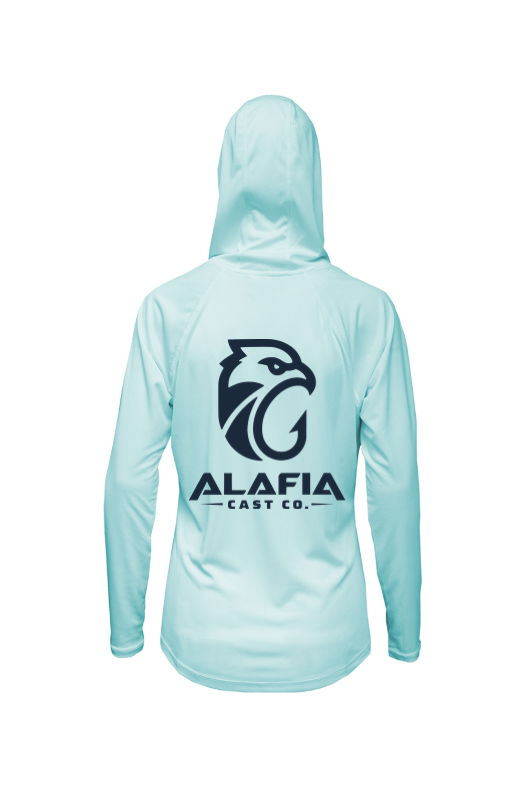
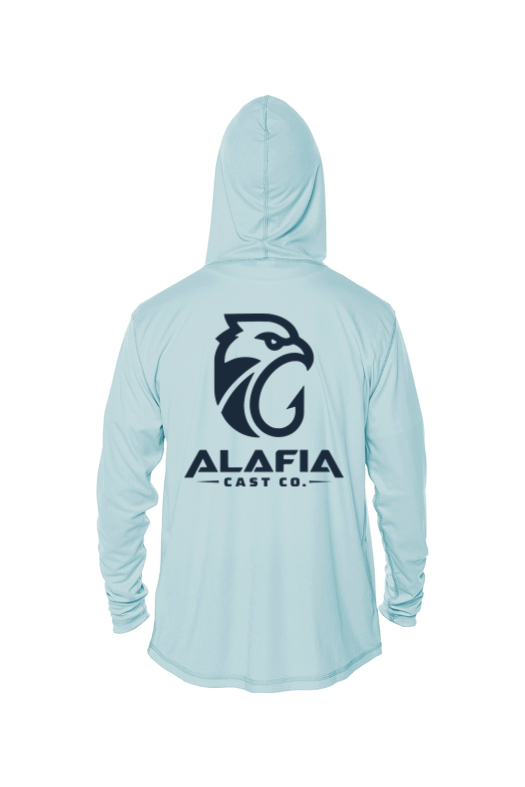
A January pier morning starts in a jacket. Then the tide's still running at ten, the sun's full on the rail, and you're not leaving a piling that's finally giving up fish. Wear a long-sleeve sun shirt under the jacket so you can drop the layer and keep your arms covered while you stay put.
When you want something besides sheepshead, the season guide covers what else is biting.
More from Alafia Cast Co
Licenses and regulations
The biology and rules here come from these pages. Regulations change, so check FWC before you keep a fish.
FWC sheepshead profile · FWC sheepshead regulations · FWC snook regulations · Florida Museum sheepshead profile · VISIT FLORIDA Fort De Soto fishing guide
FWC’s current saltwater and freshwater fishing rules. Regulations change.