
How to tie a surgeon's knot on a leader
The fast knot for joining main line to a leader when the diameters don't match, the mistakes that let it slip, and when a blood knot, a uni, or an Albright is the better tie.
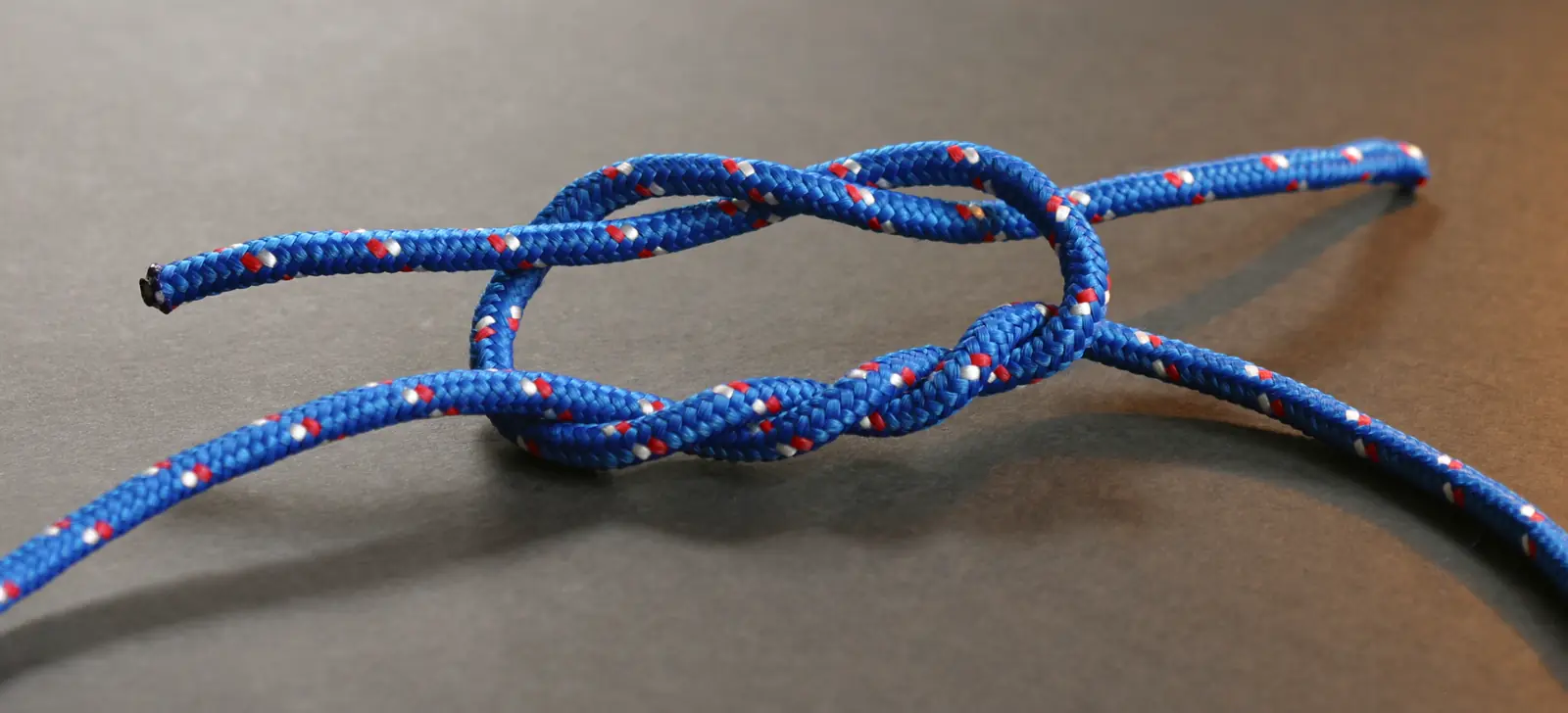
A nicked leader before the next cast
The fish is still on the pilings and the leader is fuzzy. That's the moment this knot is for. Cut the bad piece off and tie a new one before the next drop, or the next fish finds the nick for you.
FWC's snook notes put the big spawning fish around Intracoastal bridges, inlets, and the Skyway. For a bridge, they fish it at night, in the first two or three hours of the outgoing tide, from up-current, with a live bait at the base of the pilings. Bridge piles also grow barnacles, and those get scraped off and sunk as sheepshead chum, so the shell is right where the leader runs. When that leader comes back nicked, the retie happens in that window, not back at the ramp.
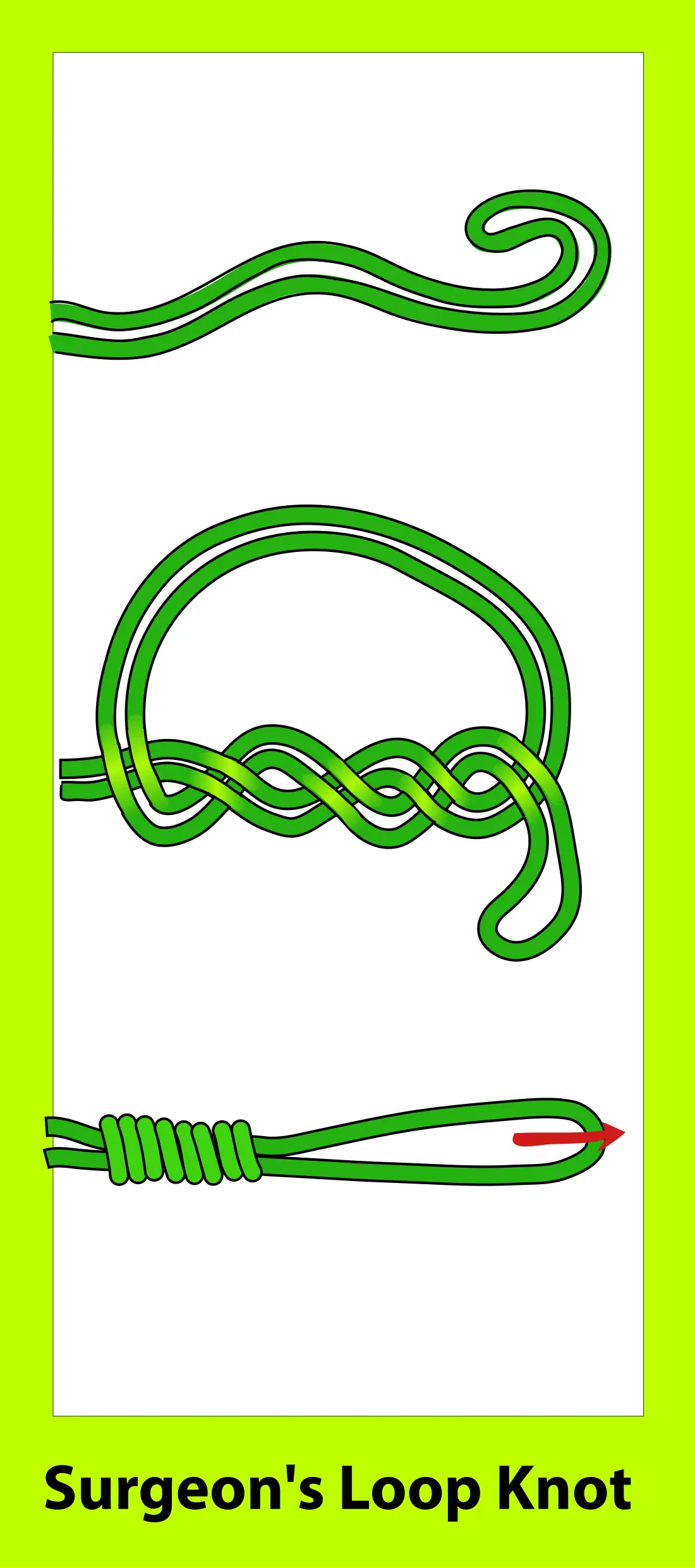
How to tie the double
Lay the main line and the leader side by side and overlap them about 6 inches. One of the two has to be short, because you pass that end through the loop you're about to make. On the water, the leader is the short one.
Work both strands as one line. Tie an overhand knot with them and leave it open. Then pull the loose ends through that same knot a second time. Don't start cinching while the loops are still lopsided. The two loops need to come out the same size, or the knot seats crooked.
Two passes is the double. A third pass through the same open loop, before you wet it, is the triple. The knot sheets these steps follow stop at the second pass. They don't give that third wrap a strength number, so learn the double first.
Wet it, then pull all four ends
Wet the wraps with water or saliva before you draw them down. Dry line binds, and the knot cuts into itself as it cinches. Pull slowly and on purpose until the wraps sit in one even barrel.
Fluorocarbon is a low-visibility leader for clear water, and a leader is what you add near sharp structure. Fluoro is stiff in the hand. It wants the same wet-down and the same steady pull. A dry, stiff leader is how the two loops come out uneven.
You are holding four ends: both standing lines and both tags. All four have to come tight together. Pull only the line to the reel and the line to the hook, and the tags stay slack inside the knot. A dry knot binds as it cinches, so wet the wraps, then pull both standing lines and both tags until the barrel is even. Skip that and it looks done. Then it creeps.
Trim after the knot is tight, not before. FWC's fishing-line guide leaves about an eighth of an inch on a finished tag. That's short enough to stay out of the rod guides, and not so close that the clippers nick the standing line. A nick there is a weak spot you just tied in on purpose.
When this knot is the one
Different diameters. A leader is often heavier than the main line, and this is the splice for joining them, including a leader tied straight onto the main line. Keep the two strands parallel while you wrap, so they don't twist up as the knot forms.
It's also the fast one. A blood knot wants five turns each way, then the tags tucked back through the middle. This one is an overhand and a second pass. When the outgoing tide is already two hours in and the leader just saw the piles, you want the short version.
When to tie a different knot
Similar thickness calls for a blood knot. It likes two lines that aren't far apart. Fifteen-pound to twenty-pound is in its range. Fifteen to fifty is not. Same-diameter mono, like a main line you just cut a tangle out of, is the blood knot's job.
Braid is the other fork. That same fishing-line guide says only certain knots, such as the uni, should be used with braid. It joins a light line to a heavier leader with an Albright, and the unweighted live-bait rig it draws for snook uses that Albright. A heavy leader, or wire, is an Albright too.
Some anglers like an FG knot for braid to fluorocarbon. For a simple, reliable tie, use a uni for braid and an Albright for light line to a heavy leader.
Both hands, and the sun on the rail
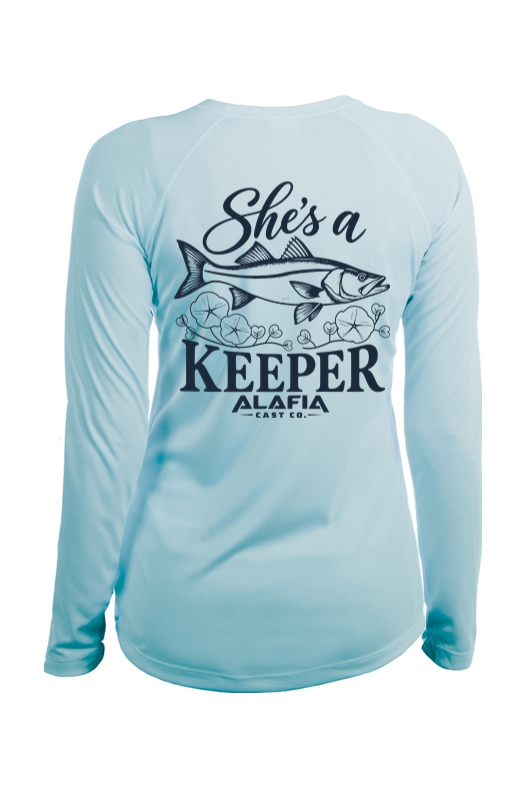
Both hands stay on the four ends until the barrel seats. The daytime version of this retie is a sheepshead pile in full sun, and your forearms are just out there while you get the loops even. A long-sleeve sun shirt covers them for that minute.
The piers and bridges guide has the Skyway's course and its own gear rules. The sheepshead guide covers the winter bite on those piles.
More from Alafia Cast Co
Licenses and regulations
The steps, the line choices, and the Tampa Bay notes come from these pages.
Pennsylvania Fish and Boat Commission: Knotes on Knots · Texas A&M AgriLife Extension: Knots You Need to Know · Hawaii DLNR: Fishing in Hawaii · New York Sea Grant: Fishing knots and hooks · FWC: Fishing Lines (2016) · FWC: Common snook fishing sketch · FWC: Sheepshead regulations
FWC’s current saltwater and freshwater fishing rules. Regulations change.