
Spanish mackerel on Tampa Bay
How to find Spanish mackerel around Tampa Bay, tell them from king mackerel, keep their teeth off your line, and the FWC rules for keeping a cooler of them.
Where do the schools show up?
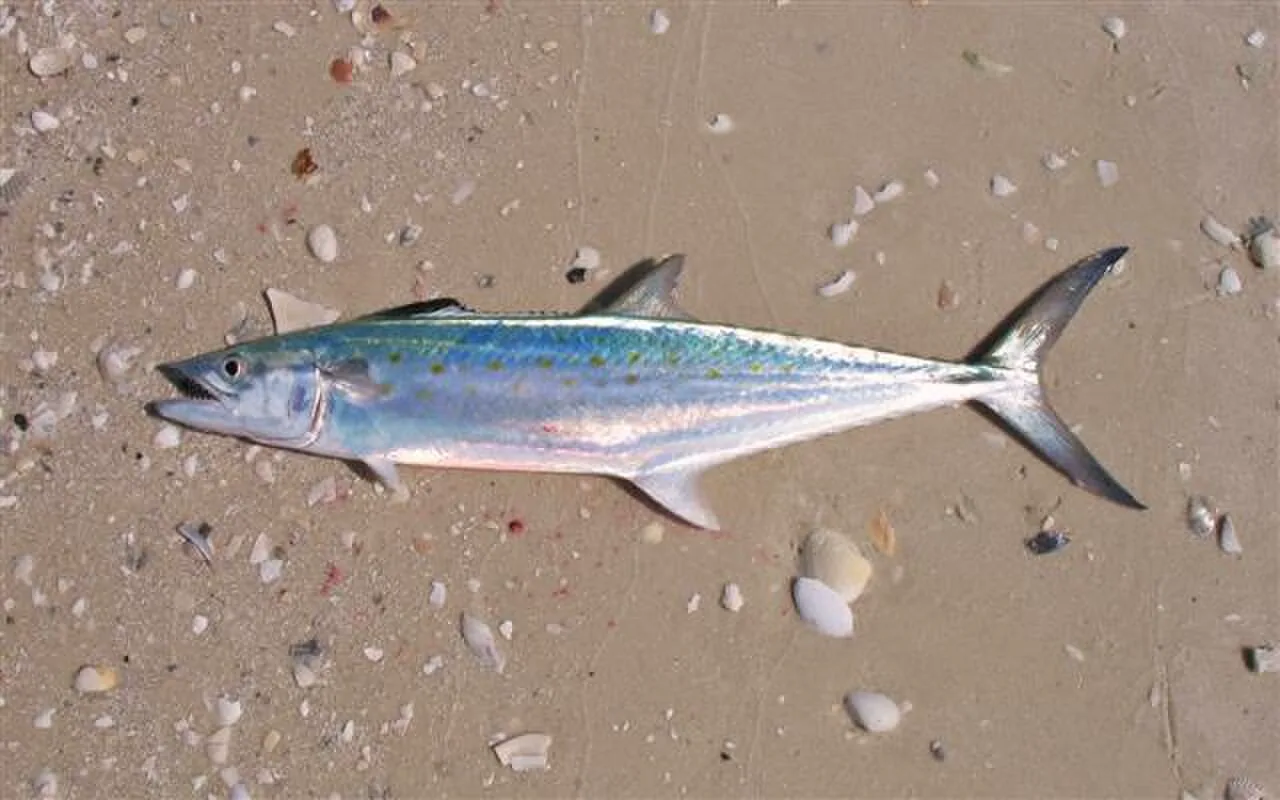
The birds are already stacked over one patch of water, and the boat that runs straight at them gets there in time to watch the whole mess sink. Spanish mackerel push bait to the top as a school, and that's what the birds are diving on. Come in from the side, close enough to cast, and leave the middle of the school alone.
Sometimes you don't even need the birds. They'll come out of the water after the bait, a slash and a splash, and that's the cast. If the jumps are moving, lead them. A lure dropped on the last splash is a lure in empty water.
FWC puts the southbound turn at 70 degrees. Below that they head for southern water, and north Florida loses them in winter. On the Gulf they're caught all year, shifting to stay in warmer water. Just north of Tampa Bay, around Pasco, spring is when they're commonly caught.
Start with the water they actually use. They hang around barrier islands and the passes between them, over grass and reefs, and along sandy beaches and piers. They often school right at the surface, which is why the birds work, and their depth range runs from about 33 to 115 feet. Small ones show up in the beach surf, so a walk down the sand is a real plan when the birds are scattered. They rarely use low salinity water. Skip the upper river miles and fish the saltier mouth of the bay.
Around here that means the passes and the beaches at the mouth, the grass inside, and a pier that reaches moving water. Our piers and bridges guide lists the public ones. For what else is moving through the bay in the same months, the season guide has the calendar.
What do I tie, and how fast do I reel?
Speed is the bite. They hit a wide mix of live, dead and artificial baits, and the artificials that work are small and shiny: spoons, dusters and jigs. If you're casting, a shallow diving lure works too. Reel it fast. A lure that crawls gets ignored by a fish that chases bait for a living.
FWC calls for light spinning or baitcasting tackle with 10 to 15 pound monofilament, and a 30 to 60 pound monofilament leader, because the teeth are razor sharp. Those teeth are large, triangular, and set in a single row. They slice light line the moment it touches them. If the line parts in a clean cut, go up in leader and retie. Don't blame the knot until the leader is heavy enough.
Throw what they already chase. Threadfin herring, cigar minnows, finger mullet, sardines and shrimp all fit, and dead bait works too. Let a live one swim into the spray under the birds, and keep the rod tip up so the line stays clear of those teeth.
Trolling is the other way to find them, which means running a line behind a moving boat while you look for birds. A lot of people pull a mackerel tree, a row of hooks dressed with tubing and a trolling spoon at the end. To get the lure down, clip on a number 1 or number 2 diving planer, then a swivel and a jig or spoon about 15 to 20 feet back so the line doesn't twist. Troll around 5 to 7 miles an hour and aim the lure at 10 to 30 feet, along reefs, ledges, and any birds hitting the surface. You can run more than one line. They travel in packs, and one rod is a slow way to meet a pack.
If you can't find a school, chum. A steady trickle of cut bait will pull them to the boat. Then cast into that slick instead of blind water.
Watch your fingers. Those teeth don't quit when the fish is in the boat. Use pliers or a dehooker, and keep your hands out of the mouth while it's still thrashing.
Is it a Spanish, a king, or a cero?
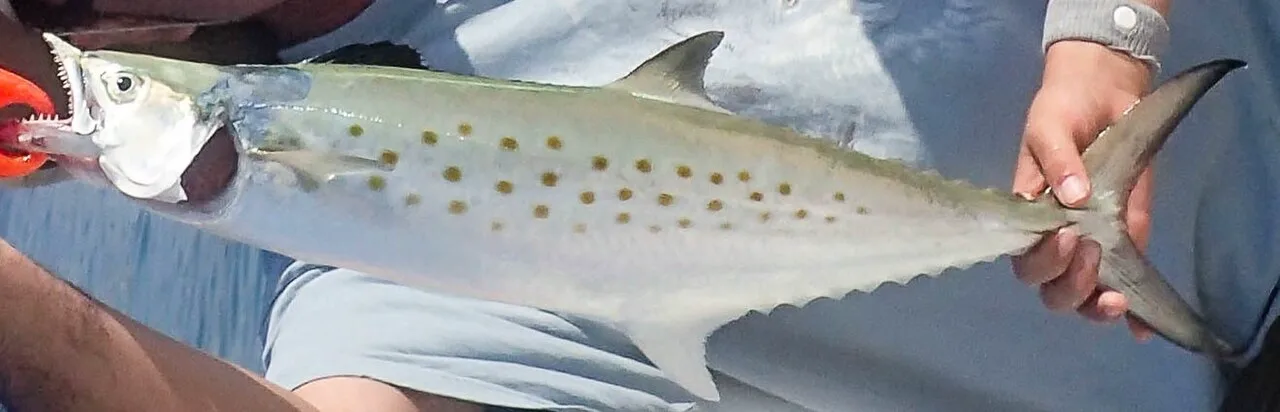
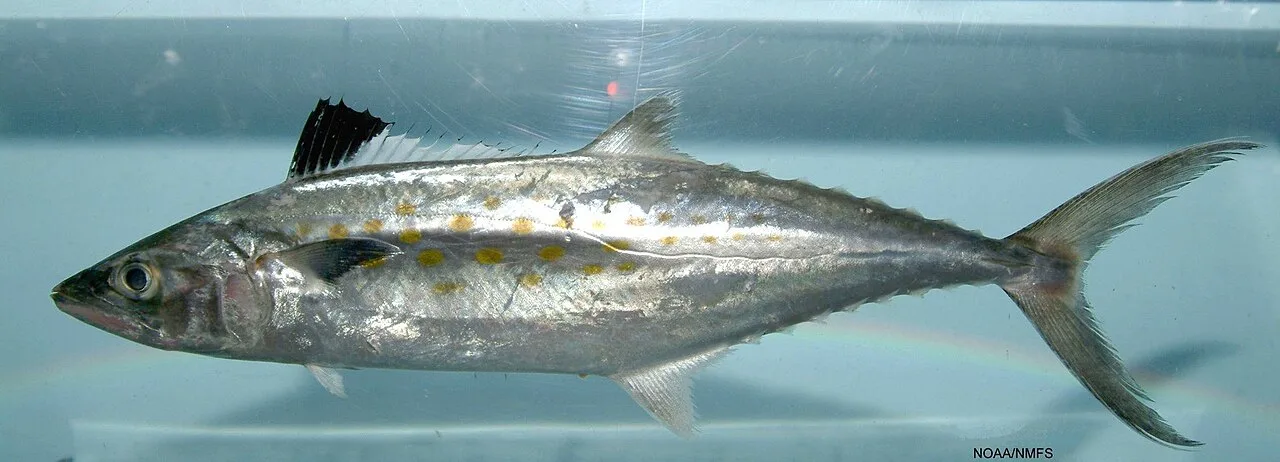
Three mackerels that look alike show up in Florida waters, and the rules aren't the same, so look before anything goes in the cooler. A Spanish mackerel has a bluish green back fading to silver, irregular golden yellow spots on the sides, a bluish black blotch on the front of the first dorsal fin, and a lateral line that slopes gently from the gill cover down to the tail.
A cero wears a yellowish stripe along the side as well as spots. A king mackerel's lateral line drops sharply under the second dorsal fin. A king's line falls off a cliff. A Spanish mackerel's just leans downhill. If you're not sure, put the fish back and sort it out from a photo on the ride home.
How do you measure a Spanish mackerel?
The fish that looked legal while it hung on the line comes up short the second it lies flat. This is a fork length fish, not a total length fish. Lay it on its side on a hard surface and close the mouth. Measure a straight line from the tip of the jaw, or the tip of the snout, to the center of the fork in the tail. That center is the bottom of the V, not the long tips. If the only tape you've got is flexible, lay the tape flat on that hard surface and measure the fish against it. Don't drape the tape along the belly. A tape that follows the curve reads long, and a short fish ends up in the cooler.
Total length is the habit from trout, snook and redfish. It runs from the most forward point of the head, mouth closed, to the farthest tip of the tail with the tail pinched, the fish still on its side. Pinch a mackerel's tail and measure to the tips and you've measured a different fish than the rule uses. A mackerel that only makes 12 inches along the curve or out to the tips is a short fish.
FWC's minimum is 12 inches fork length, the bag is 15 per harvester per day in Gulf and Atlantic state waters, and the season is open year-round. Legal gear is hook and line, cast net, beach or haul seine, and spear. Rules change, so check the page the week you go. Keep a measuring board in the boat or the pier bucket before the first fish shows up, and let the short ones go while they're still kicking.
What goes wrong on a hot bite?
A slow retrieve is the quiet miss. They want a fast moving target, so if the school is up and the spoon is loafing, speed up before you change lures. The shiny one's probably fine. It's just late to the chase.
They're a fragile fish, and they have no swim bladder, so don't vent one you're letting go. Get it back in the water fast and skip the deck photo session. Treble hooks tear them up. Pinch the barbs down, or swap the trebles for a single, at the dock, not after the first fish is already torn up.
Sharks and barracuda will eat a hooked mackerel on the way in. Reel. A long, casual crank is how you donate the fish. Keep the drag honest and the rod loaded until it's at the boat.
Spearing one is a hard way to catch this fish. They're fast and they see well. Fish look bigger underwater, so a size guess made through a mask runs long. Practice those guesses on fish with no size limit before you pick a mackerel out of a school.
You're on the end of a pier, birds working just past a comfortable cast, and the sun's already on your arms while you wait for the school to drift in. A Pier Pressure Men's Sun Shirt stays on for that wait, sleeves down, so you can watch the water instead of hunting shade. When the bait finally sprays inside range, you're still on the rail.
More from Alafia Cast Co
Licenses and regulations
The places, tackle and measuring method in this guide come from these pages.
FWC Spanish mackerel profile · FWC Spanish mackerel regulations · FWC fish measurement · FWC Gone Coastal column on Spanish mackerel · Florida Museum Spanish mackerel profile · UF/IFAS Extension Pasco County, Gulf Coast Catch and Cook: Spanish Mackerel
FWC’s current saltwater and freshwater fishing rules. Regulations change.