
How to use a descending device to release fish
Fish pulled up from deep water often can't swim back down. How to spot barotrauma, how a descending device works, when venting is allowed, and where you're required to carry one.
Why deep-water fish float
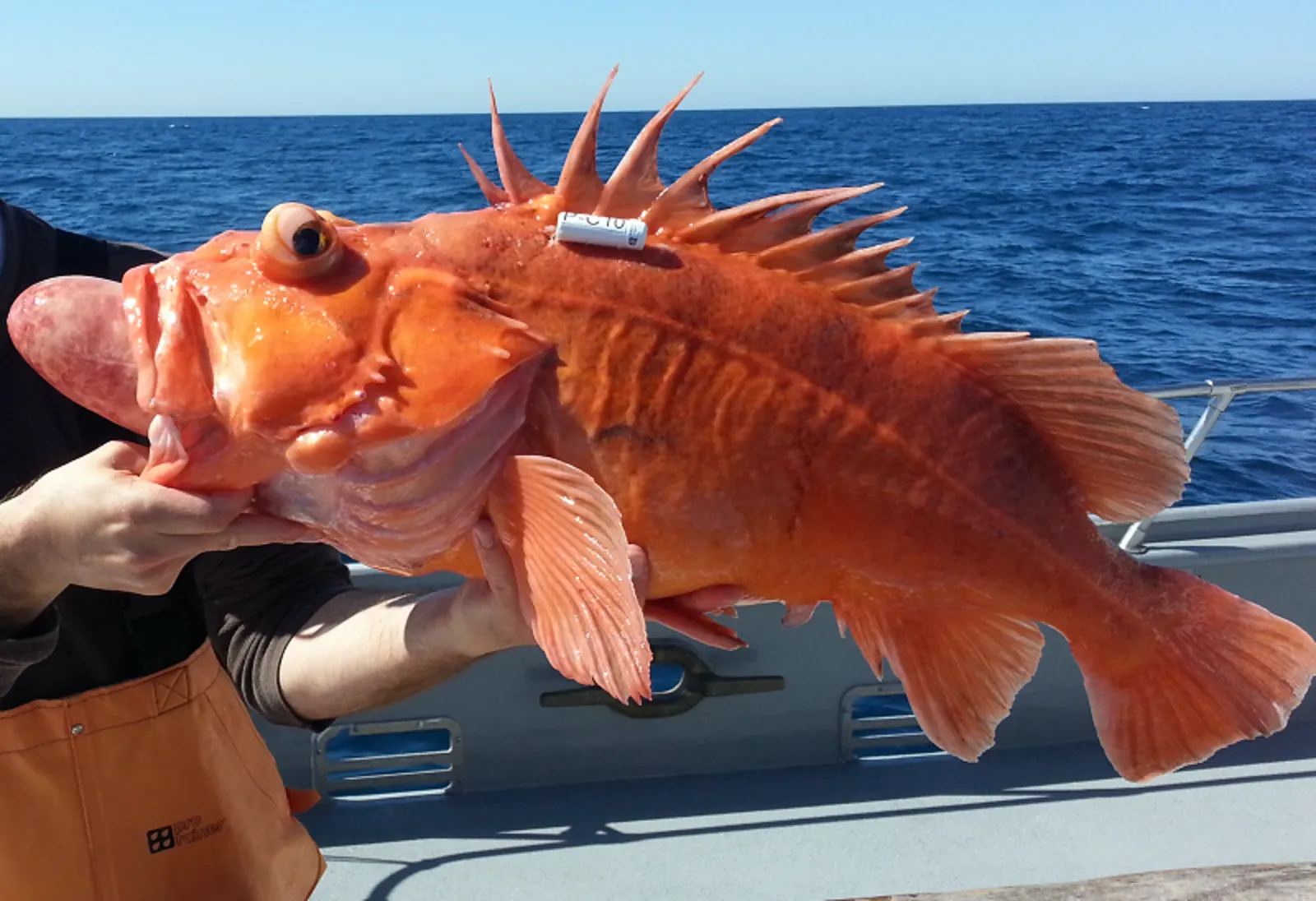
Most fish have a swim bladder, a gas-filled sac that lets them hover at a set depth. Reel one up fast from deep water and the pressure drops, so that gas expands. The Gulf Council says this injury, called barotrauma, generally shows up in fish caught in 90 feet of water or more, though it can happen as shallow as about 33 feet. The South Atlantic Council says fish from deeper than 30 feet suffer some degree of it.
A fish with barotrauma often can't swim back down. It floats at the surface, and the Gulf Council notes that floating fish become easy meals for dolphins, sharks and birds. A fish you released alive may never make it to the bottom.
Signs of barotrauma
- Swollen belly: The abdomen looks bloated or tight
- Bulging eyes: The eyes push out of the head
- Stomach out of the mouth: What looks like a balloon in the mouth is the stomach, pushed out by expanding gas
- Bubbles under the scales: Gas collects under the skin
Don't pop the stomach. The organ sticking out of the mouth is the fish's stomach. Don't puncture it or push it back in. Getting the fish back to depth is what helps.
What a descending device does
A descending device takes the fish back down to the depth where you caught it. As it sinks, the water pressure rises and the gas shrinks back to normal, and then the device lets the fish go. Florida's Fish and Wildlife Conservation Commission says on its barotrauma page that descending devices are the most effective method for releasing fish with barotrauma.
FWC describes three main types:
- Lip clamps: Clip onto the fish's lip and open when you tug the line or when they reach a set depth
- Inverted hooks: A weighted, barbless hook that you hook through the lip. Point it down and the fish slides off when you pull up
- Fish elevators: A weighted cage or box that carries the fish down and opens at depth
Federal rules say a descending device has to be attached to at least 16 ounces of weight and at least 60 feet of line. FWC suggests about a pound of weight for every 5 pounds of fish.
How to use one
- Have it rigged first: Keep the device tied on, weighted and ready before you start fishing deep, not in the package in a console
- Keep the fish out of the air as little as you can: The South Atlantic Council lists limiting air exposure as one of its best practices
- Handle it gently: FWC recommends wet hands, a dehooking tool, and holding a fish horizontally
- Clip it on and drop it: Attach the device and lower the fish quickly back toward the depth where you caught it
- Release at depth: Trigger the release and bring the device back up for the next fish
What about venting?
Venting means letting the gas out with a sharpened, hollow tool pushed through the side of the fish. The Gulf Council's definition calls for a tool of at least 16 gauge. FWC's barotrauma page shows exactly where to insert it, just behind the base of the pectoral fin. A knife, an ice pick or a hook is not a venting tool, and FWC says using one isn't legal.
Agencies prefer descending. The South Atlantic Council calls it the preferred method, and in South Atlantic federal waters you still have to carry a descending device even if you vent.
Vent only if you know how. Venting in the wrong spot can kill the fish. If you aren't trained, use a descending device instead.
Where descending devices are required
Rules depend on where you fish, and they've changed recently. Here's where they stood when this was written.
- South Atlantic federal waters: The South Atlantic Council says any recreational, for-hire or commercial boat fishing for or possessing snapper-grouper species must have a descending device on board and readily available, attached to at least 16 ounces of weight and 60 feet of line
- Gulf federal waters: The DESCEND Act, signed January 13, 2021, required boats fishing for reef fish to carry a descending device or venting tool rigged and ready starting in January 2022. NOAA Fisheries says that requirement expired in January 2026. The Gulf Council voted in November 2025 to keep the measures, and NOAA has proposed continuing them, so check the current rule before you go
- State waters: Each state sets its own rules. Check the agency for the waters you'll fish
Cost isn't much of a hurdle. The National Sea Grant Law Center put a descending device at about 100 dollars and a venting tool at 20 to 40 dollars.
Before you go
Bottom fishing offshore means hours in open sun with no shade to speak of. A long-sleeve UPF shirt or hoodie from our sun gear keeps it off between drops. For fish you catch in shallow water, our catch-and-release guide covers handling that works on any species.
More from Alafia Cast Co
Licenses and regulations
These pages explain barotrauma and the rules on descending and venting. Federal and state rules change, so check them before a trip offshore.
FWC barotrauma and descending devices · Gulf Council on barotrauma and the DESCEND Act · South Atlantic Fishery Management Council best fishing practices · NOAA Fisheries on continuing the Gulf release rules · National Sea Grant Law Center (Feb. 2026) · FWC fish handling
FWC’s current saltwater and freshwater fishing rules. Regulations change.